




















Summary. Managers, employees and HR teams in Singapore, Malaysia and the Philippines can use these 20+ AI prompts to prepare annual performance reviews, organized by stage from evidence gathering to the appraisal conversation. The prompts cover year-in-review evidence logs, self-evaluations, manager write-ups, bias and calibration checks, follow-up emails, and multi-country needs such as bilingual summaries and separating bonuses from statutory pay. The best results come from feeding AI specific goals and anonymized examples, then editing every draft so each claim is backed by real work rather than polished filler. Omni HR’s performance module keeps 360-degree, self and manager reviews in one structured record, while Mino and Omni MCP let teams draft reviews from live performance data without exporting it.
AI prompts for performance reviews are instructions you give a tool like ChatGPT, Claude or Gemini to turn a year of goals, notes and feedback into a specific first draft of an appraisal. The most effective prompts supply anonymized evidence, ask the AI to cite an example for every claim, and ask it to flag where evidence is missing. A manager then edits and owns the final rating.
Used this way, AI fixes the biggest weakness in most annual reviews such as feedback that is too short, too vague, or too harsh to act on.
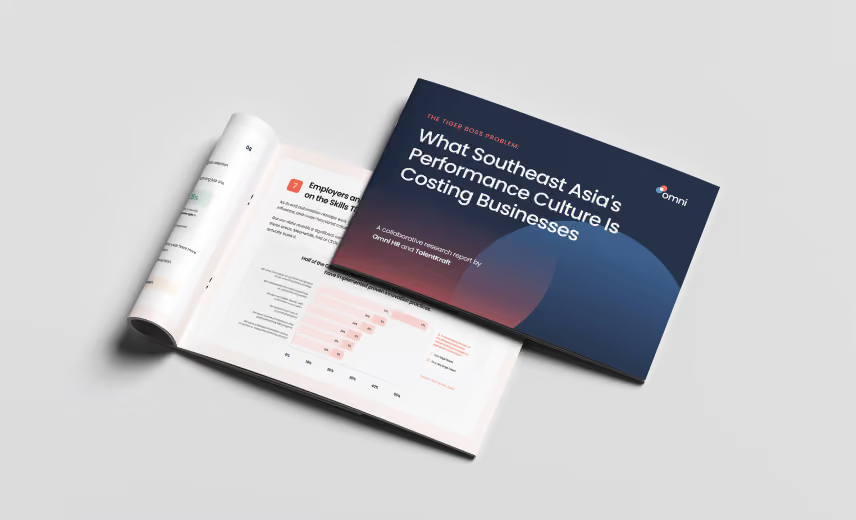
That weakness has a measurable cost. When we analyzed performance review data across seven Southeast Asian markets for our report, The Tiger Boss Problem, we found that top-rated reviews averaged just 28 words per comment at the median. Employees who received the thinnest feedback left at 22.4% within 12 months, compared with 19.5% for those who received the most detailed feedback.
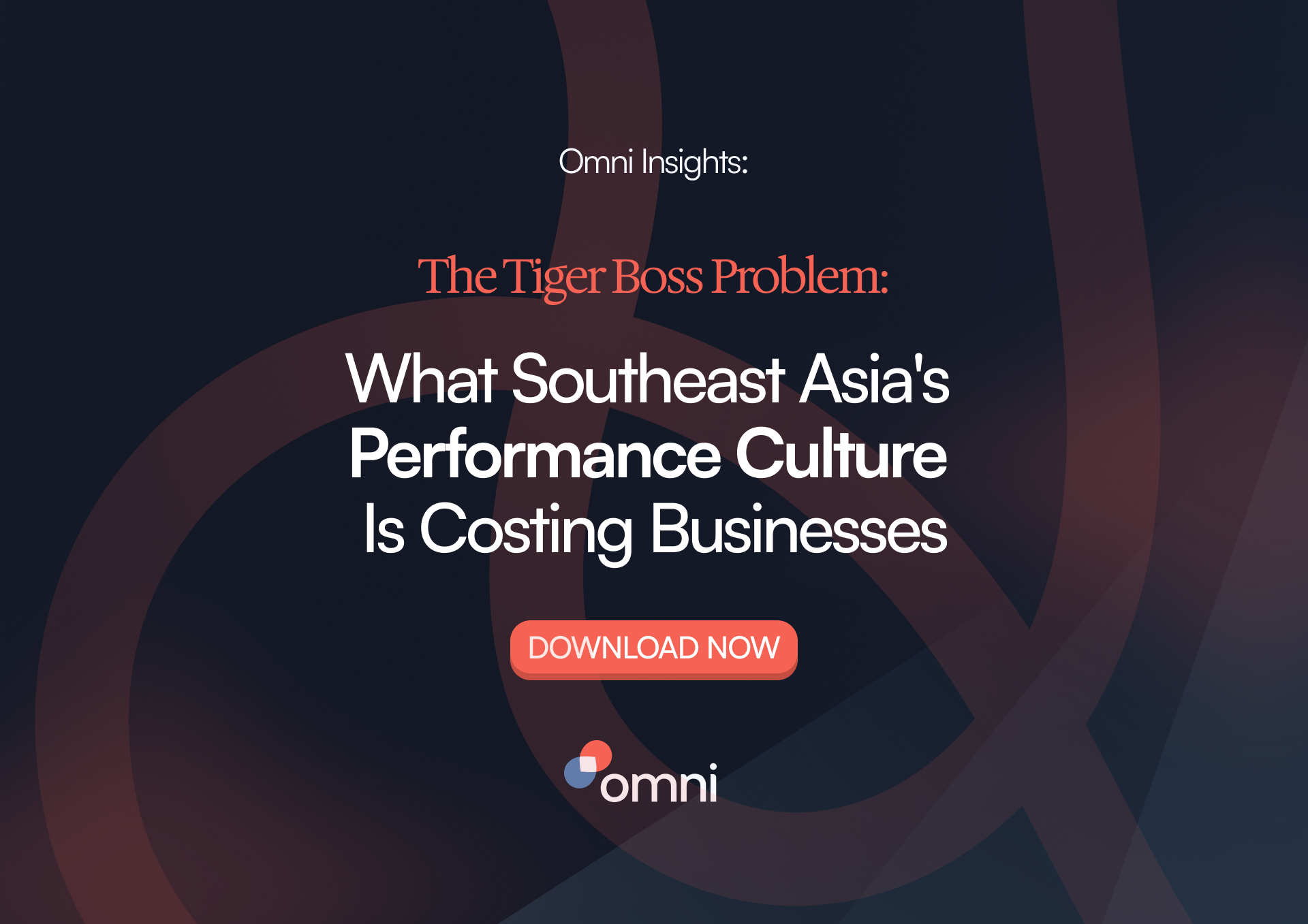
Want the full picture? Download The Tiger Boss Problem to see how mid-market teams across Asia structure reviews, ratings and pay-for-performance.
This guide gives you 20+ prompts organized by stage of the annual performance review, or performance appraisal as most teams in Malaysia and the Philippines call it. It also includes a dedicated section for multi-country teams in Asia.
AI Prompts for Performance Reviews
How to Write AI Prompts for Performance Reviews That Get Specific Results
The general AI prompting framework still applies. Give the tool full context, a clear objective and a format. The only difference for appraisals is to add a fourth element, evidence.
A Harvard Business Review article argues that most companies use AI to rewrite reviews in smoother language. The risk is that vague feedback starts to sound convincing. Instead, use AI to surface the evidence behind a rating by compiling and analyzing the projects, decisions and results that show how someone actually performed.
In practice, that means feeding the tool facts, not impressions:
❌ “Write a positive annual review for a marketing executive who did a good job this year.”
✅ “Using the goals and notes below, draft an annual performance review for a marketing executive. For each goal, state the outcome, cite one specific example, and suggest one development area. Flag any goal where the notes don’t contain enough evidence to make a judgement. Under 400 words.”
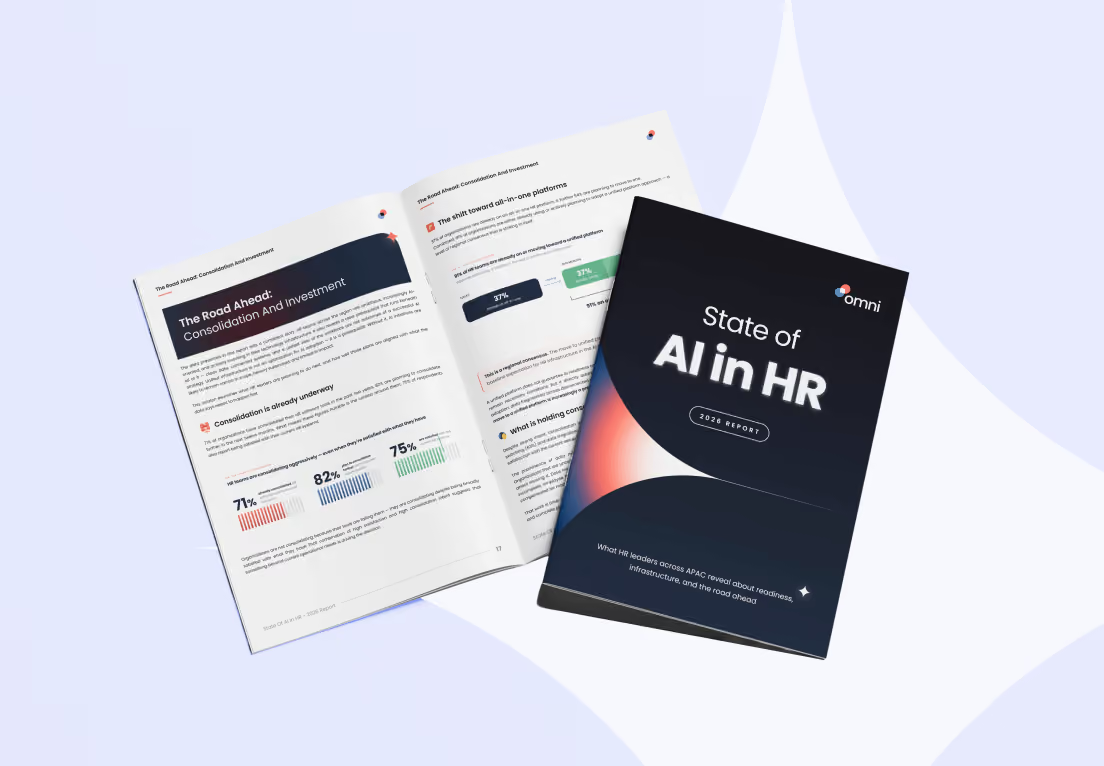
Even with good evidence, AI output still needs a human check. In our State of AI in HR 2026 survey of 400+ HR leaders in Asia, only 21% said they trust AI enough to act on its recommendations without checking first. For performance appraisals, that caution is the right instinct.
Two habits make every prompt below more useful:
- Anonymize first. Replace names and IDs with “Employee A” before pasting anything into a public AI tool.
- Ask it to flag gaps. Adding “Tell me where the evidence is missing” stops the tool from filling holes with plausible-sounding filler.
Evidence-Gathering Prompts (Before You Write Anything)
Evidence-gathering prompts turn scattered notes into a structured record before anyone writes a rating. Run these first so every later draft has facts to cite.
1. Year-in-review evidence log
“Here are my anonymized 1:1 notes, project updates and feedback for Employee A from [date] to [date]. Organize them into a chronological evidence log grouped by goal. For each entry, note what happened, the measurable result, and the source. Do not add interpretation.”
2. Goal progress check
“Compare these [X] annual goals against the evidence log below. For each goal, rate progress as met, partially met or not met, quote the evidence that supports the rating, and list what’s missing. Use a table.”
Learn more: How to Write SMART Goals for Performance Reviews
3. Recency bias check
“Here is my evidence log for Employee A across the full year. Tell me whether my notes are weighted toward the last three months, and list any significant contributions from the first half of the year that I should include.”
Teams that run a mid-year review have a much easier time here, because half the year’s evidence is already written down. In our Tiger Boss Problem research, we recommend two review cycles a year as a baseline.
Additional resources: 30 Mid-Year Performance Review Questions to Spark Action
4. 360-degree feedback synthesis
“Summarize this anonymized 360-degree feedback from [X] peers, direct reports and stakeholders. Group it into strengths, development areas and patterns that appear across more than one respondent. Separate observations of behaviour from opinions about personality.”
Multi-source input matters for retention, not just fairness. In our research, companies running five review types saw 13.5% attrition over 12 months, while companies running only one review type saw attrition nearly triple that.
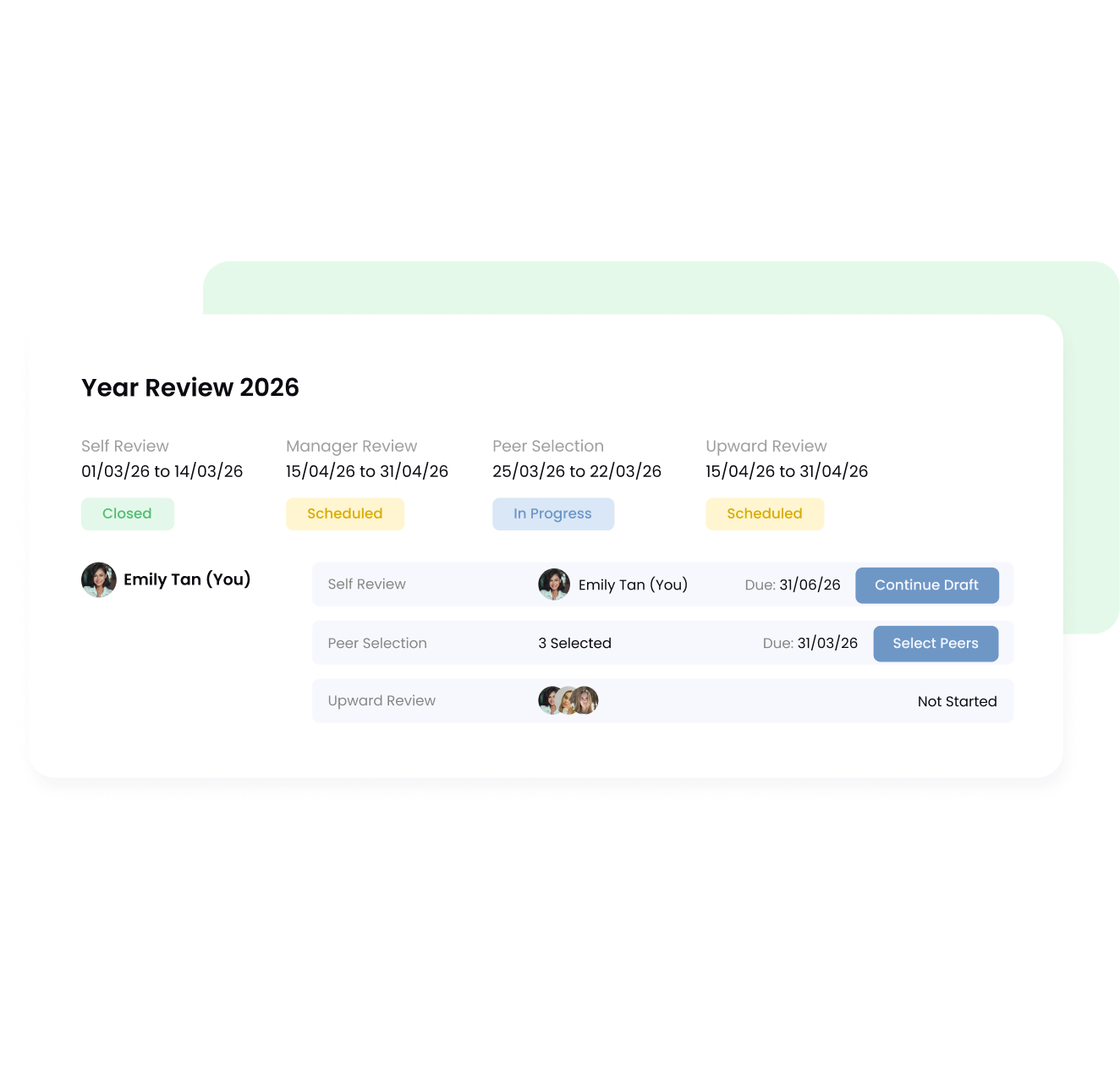
Omni's performance module supports 360-degree, self, peer and manager reviews with automated peer selection and anonymous feedback. That gives this prompt cleaner input to work with.
Self-Evaluation Prompts for Employees
Self-evaluation prompts help employees turn their own work into specific, outcome-led statements. They are the most under-used AI prompts in the review cycle and the easiest to get right.
5. Self-appraisal first draft
“I’m writing my annual self-evaluation as a [role]. Here are my goals and what I delivered against each. Draft a self-appraisal that leads with outcomes and numbers, uses first person, and stays factual rather than modest or boastful. Under 350 words.”
Get inspired: 46 Effective Self-Evaluation Examples for Performance Reviews
6. Turn tasks into impact statements
“Rewrite these task descriptions as impact statements using the format: action, result, why it mattered to the business. Keep each under 30 words. Flag any where I haven’t given you a result.”
7. Honest development areas
“Based on these projects, suggest two genuine development areas for my self-evaluation. For each, describe the situation, what I’d do differently, and one concrete step I’ll take next year. Avoid disguised strengths like ‘I work too hard’.”
8. Career conversation prep
“I want to use my annual review to discuss [promotion / a move into X / a new skill]. Based on my self-evaluation, draft three talking points that connect my results this year to that goal, and two questions to ask my manager.”
Learn more: Strategies for Effectively Structuring Self-Evaluation Conversations
Manager Prompts for Writing the Performance Appraisal
Manager prompts convert the evidence log into a review that names specific behaviours, explains their impact and sets a clear direction for next year.
They also fix the two feedback patterns most common in Southeast Asia: hollow praise and harsh criticism.
9. Full review draft from evidence
“Using the evidence log and goal ratings below, draft an annual performance review for Employee A. Structure it as: overall summary, achievements by goal, development areas, and goals for next year. Every claim must link to a specific example from the log. Under 500 words.”
Additional resources: 50 End of Year Employee Review Examples and Tips
10. Fix hollow praise for top performers
“This feedback for a top-rated employee is too thin: [paste comment]. Expand it into a review comment of 80 to 100 words that names the specific behaviours behind the result, explains their impact on the team, and gives one stretch goal for next year.”
This prompt targets a pattern we found in our research where top-rated reviews average just 28 words, so the people companies most want to keep get the least guidance on how to grow. Get the full picture from our report here.
11. Rewrite harsh feedback into a path forward
“Rewrite this critical review comment so it stays honest about the performance gap but adds direction: [paste comment]. Include what good looks like, one example of the gap, and the support the employee will get. Remove fear-driven or accusatory language.”
In The Tiger Boss Problem report, we also found that bottom-rated reviews run a third longer than top-rated ones (37.5 words at the median). They are often packed with phrases like “improvement needed” that document mistakes without offering direction. This prompt keeps the honesty and adds the path forward.
Get started: 200 Performance Review Phrases for Managers
12. Next-year goals
“Based on this review, draft three SMART goals for Employee A for [year]. Link each to a development area or strength mentioned in the review, and include a measurable target and a mid-year checkpoint.”
Get inspired: Professional SMART Goal Examples
13. Performance improvement plan outline
“Employee A did not meet [goals] this year. Draft a 60-day performance improvement plan outline with the specific gaps, measurable targets, weekly check-ins, support provided and the review date. Keep the tone factual and supportive.”
Get started: Performance Improvement Plan Template
Calibration and Bias-Check Prompts for HR
Calibration and bias-check prompts help HR test whether ratings are consistent across managers and whether comments judge behaviour rather than personality. Run them on anonymized data before any rating is finalized or linked to pay.
This step carries compliance weight. In Singapore, the Tripartite Guidelines on Fair Employment Practices (TGFEP) are the standards employers are expected to follow for fair employment. They expect decisions such as promotion and performance assessment to be based on merit, which means appraisal comments need to rest on job-related evidence.
14. Bias review on appraisal comments
“Review these anonymized appraisal comments for potential bias, including personality-based language (‘not a culture fit’, ‘too emotional’), vague judgements and different standards across employees. Flag each phrase, explain the concern, and suggest a behaviour-based rewrite.”
15. Rating consistency check
“Here are anonymized ratings and comments from [X] managers using a 5-point scale. Identify managers whose ratings cluster unusually high or low, and comments where the written evidence doesn’t match the rating given.”
16. Calibration meeting pre-read
“Using these anonymized review summaries for [team], draft a one-page calibration pre-read. For each employee, give the proposed rating, the two strongest pieces of evidence, and one open question for the calibration panel.”
17. Feedback length and quality audit
“Analyze these anonymized appraisal comments. Report the average word count for top-rated versus bottom-rated employees, and list comments under 30 words that need more specific evidence before the review is finalized.”
Prompts 15 and 17 work best on structured data. Omni's reports and analytics pull ratings and completion data from every review cycle into one place, so HR can export a clean, anonymized dataset instead of compiling comments manually.
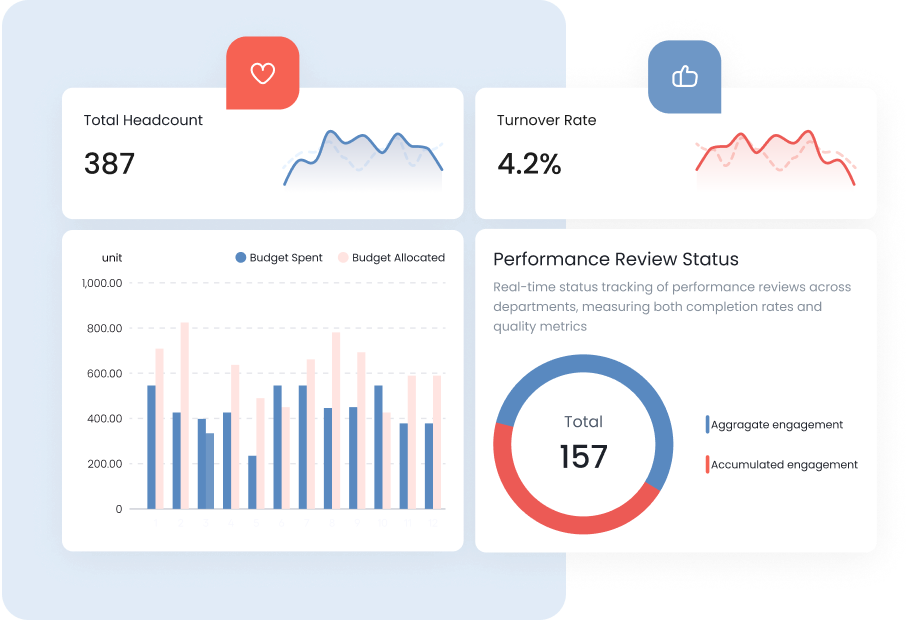
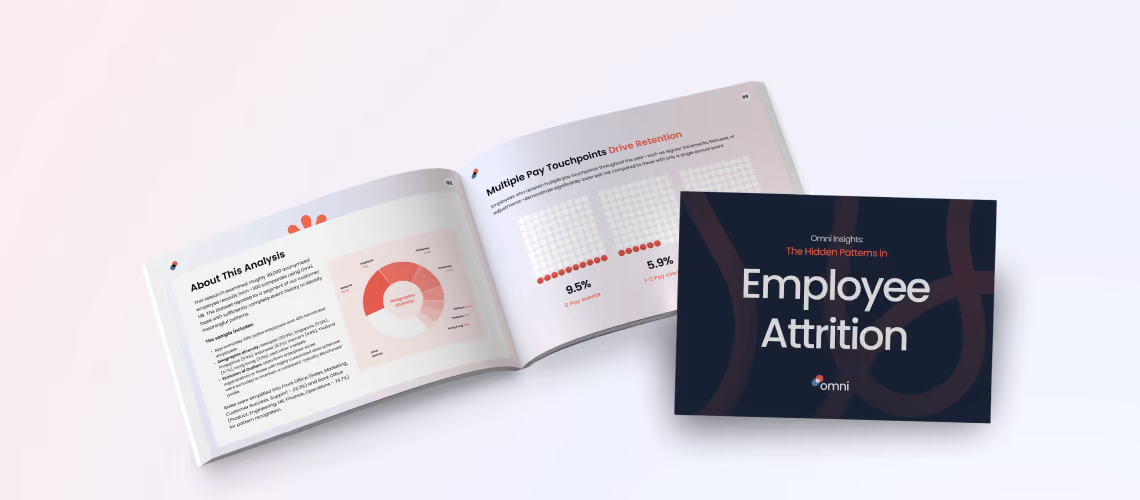
Calibration also feeds pay decisions. In our Employee Attrition report, based on about 30,000 employee records, employees with a pay increase near the 12-month mark exited at 2.7% in the following 90 days. Those without one exited at 7.1%.Prompts for the Performance Appraisal Conversation
Conversation prompts prepare managers to deliver the review, handle disagreement and confirm next steps in writing. The written review matters, but the conversation is where employees decide whether the feedback was fair.
18. Meeting agenda
“Draft a 45-minute annual review meeting agenda for a manager and Employee A. Include time for the employee’s self-assessment, the manager’s feedback, disagreement, development goals and next steps.”
Learn more: 6 Tips for Managers to Improve Your Next Employee Work Review
19. Difficult conversation rehearsal
“Act as Employee A, who will be disappointed by a ‘partially meets expectations’ rating because they believe [reason]. I’ll practise delivering the feedback. After three exchanges, tell me where I was unclear or defensive.”
20. Follow-up email
“Draft a follow-up email after an annual performance review. Summarize the agreed rating, two key strengths, two development goals with dates, and the next check-in. Warm, professional, under 200 words.”
Additional resources: The Total Performance Review Kit
AI Prompts for Performance Reviews in APAC Teams
Running appraisals across several markets in Asia adds language, culture and statutory pay differences that generic prompt lists skip. These five prompts are built for that complexity.
21. Feedback for indirect communication cultures
“Rewrite this direct review comment for an employee in [Malaysia / the Philippines / Indonesia] where feedback is usually delivered indirectly. Keep the performance message and the required action unchanged, but frame it respectfully and constructively. Show both versions.”
This matters for retention. In the engagement data we analyzed for our report, employees ranked respect and support for growth above competitive salary as top motivators.
Learn more: How to Build a Feedback Culture
22. Bilingual review summary
“Translate this appraisal summary into [Bahasa Malaysia / Filipino / Bahasa Indonesia] for an employee who prefers to read it in their first language. Keep ratings, goals and dates identical, and flag any HR terms without a clear equivalent.”
Always have a fluent speaker check translated appraisals before they are shared.
23. Separating bonuses from statutory pay
“Draft a short note for managers in the Philippines explaining that 13th month pay is a statutory entitlement, not a performance bonus, and how to talk about performance-linked bonuses separately in appraisal conversations.”
In the Philippines, 13th month pay is required under Presidential Decree No. 851 for rank-and-file employees who have worked at least one month in the calendar year. It must be paid no later than 24 December, whatever their rating.
See 13th Month Pay in Asia for rules by country, or work out pro-rated amounts with our free 13th month pay calculator.
24. Multi-country review cycle plan
“Create an annual performance review timeline for a company with teams in Singapore, Malaysia and the Philippines. Account for major public holidays in [months], year-end bonus and salary review timing, and set deadlines for self-evaluations, manager reviews, calibration and conversations.”
25. Regional performance summary for leadership
“Using this anonymized ratings data by country, draft a one-page summary for leadership comparing rating distributions, completion rates and common development themes across Singapore, Malaysia and the Philippines. Include three observations and two recommended actions.”
Learn more: HR Metrics to Track
What to Watch Out For When Using AI for Performance Appraisals
Performance data is some of the most sensitive information HR holds. Three risks need managing before managers paste reviews into AI tools.
- Data privacy. Names, employee IDs, ratings and salary data are personal data under three laws:
- Singapore: the Personal Data Protection Act 2012 (PDPA), the law governing how organizations collect, use and disclose personal data
- Malaysia: the Personal Data Protection Act 2010
- Philippines: the Data Privacy Act of 2012
- Polished but weak reviews. AI makes vague feedback sound convincing. If a draft contains a claim you can’t back with an example, delete it.
- Automated decisions. Ratings, pay and promotion decisions need a human owner. Singapore’s Personal Data Protection Commission (PDPC) published advisory guidelines in March 2024. They cover using personal data in AI recommendation and decision systems and are worth reviewing before you use AI beyond drafting.
Where Omni HR and Mino Come In
Prompts are only as good as the evidence behind them, and that evidence is usually scattered. Goals sit in one spreadsheet, 360 feedback in another, and 1:1 notes in a manager’s notebook. In our State of AI in HR 2026 survey, 1 in 2 HR leaders said fragmented data already limits their ability to adopt AI.
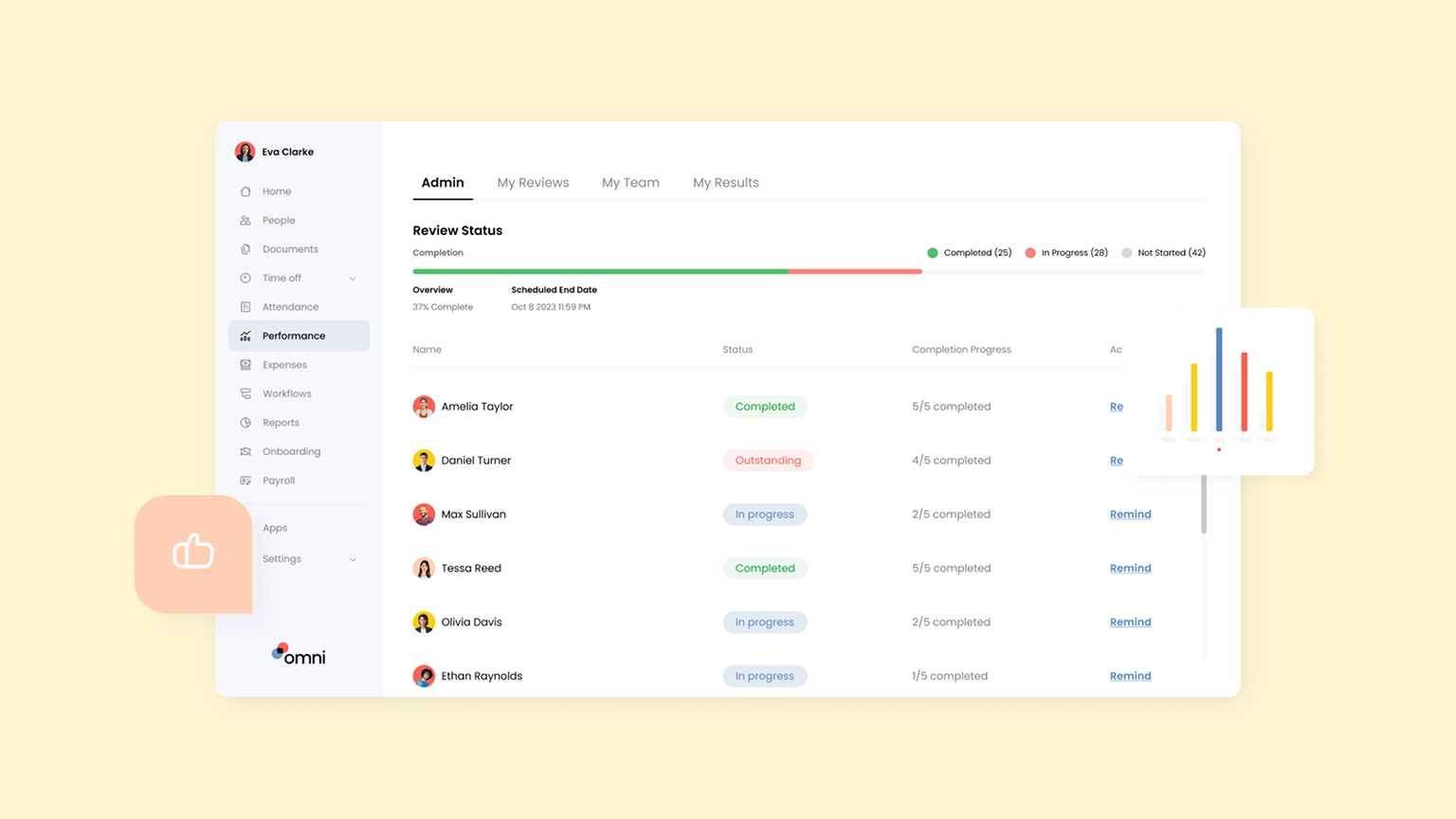
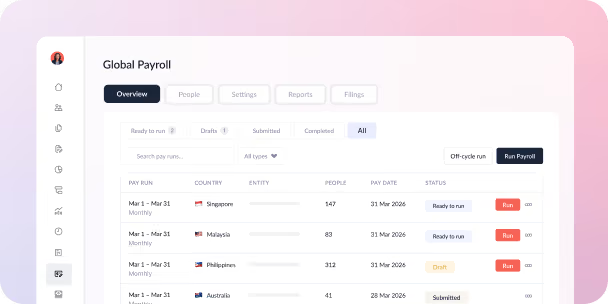
Omni HR’s performance module puts every review cycle on one structured record. It includes custom appraisal forms, automated cycles and reminders, anonymous feedback and completion tracking. Performance data also connects to payroll, so rating and pay decisions draw from the same source.
Dev Team cut its performance review cycle from weeks to days and Mothership reported a 93.75% improvement in performance review processing time.
“Omni has allowed us to tap into new ways to professionalize and scale our company.”
- Travis Loh, HR Manager at Mothership
Mino, Omni HR’s AI agent, already has the context these prompts ask you to paste in. When linked, managers can simply ask Mino to prepare reviews and summarize performance data without exporting a single file. See how HR teams in Asia use Mino.
For teams working in Claude or ChatGPT, Omni MCP connects those tools to live Omni HR data under existing permissions. The AI then drafts from real review records rather than copied-and-pasted notes, and no performance data is left sitting in a public tool. Learn more in MCP for HR, explained.
See how Omni HR keeps performance data in one place and AI-ready across Singapore, Malaysia and the Philippines. Book your demo today.
Frequently Asked Questions
The best AI prompts give the tool evidence, not impressions. Include the employee’s goals and anonymized notes and feedback, then ask for a structured draft that cites an example for every claim and flags missing evidence. Prompts for self-evaluations, bias checks and calibration pre-reads cover the rest of the annual review cycle. Teams using Omni HR’s performance module already have goals, self-evaluations and 360-degree feedback in one record, so there’s less to collect before prompting.
Yes, as a drafting tool. ChatGPT can organize notes, draft review comments and rewrite feedback. Managers should anonymize employee data first, check every claim against real examples, and own the final rating. For teams that want ChatGPT or Claude to draft from real review data, Omni MCP connects those tools directly to live Omni HR data, so managers don’t have to copy and paste notes.
Performance data is personal data under Singapore’s Personal Data Protection Act 2012 (PDPA), Malaysia’s Personal Data Protection Act 2010 and the Philippines’ Data Privacy Act of 2012. Pasting identifiable data into public AI tools can create compliance risk. Anonymize data, use approved tools with appropriate data protection terms, and confirm your approach with legal counsel.
The terms are often used interchangeably. A performance appraisal is a formal evaluation of job performance against set objectives, and is the more common term in Malaysia and the Philippines. “Performance review” is often used more broadly to include development and goal-setting conversations. In Omni HR, teams can run either format using custom review forms and annual, bi-annual or continuous review cycles.
Give the AI your goals and what you delivered against each, then ask it to turn tasks into impact statements with measurable results. Ask it to suggest genuine development areas and flag where results are missing. Edit the draft so it sounds like you before submitting it, whether that’s through a self-review form in Omni HR or your company’s own template.
ChatGPT needs you to paste in all the context: goals, notes and feedback. Mino, Omni HR’s AI agent, is built into the platform and already works with your team’s performance data, so managers can ask it to prepare a review or summarize results without exporting a file. It’s the difference between a general-purpose assistant and one that already knows your team.