




















Summary. Employers hiring foreign professionals in Singapore, Malaysia, the Philippines, Indonesia, Vietnam and Thailand need an approved work pass or permit before day one, but salary floors, processing times and employer duties differ by markets. Singapore and Malaysia publish minimum salaries that are rising in 2026 and 2027. Thailand applies nationality-based and Board of Investment (BOI) income floors, while the Philippines, Indonesia and Vietnam rely on labor market tests, levies or approval steps instead. HR teams should check every current and planned foreign hire against the new floors now: Singapore’s Employment Pass rises to S$6,000 for new applications from 1 January 2027, and Malaysian renewals already follow the June 2026 rules. Omni HR keeps each employee’s pass details, salary and renewal dates in one employee database and runs compliant payroll in all six markets, so HR can spot pass holders below a new threshold before renewals are filed.
Hiring a foreign professional in Southeast Asia takes more than a job offer. Each market sets its own rules on who qualifies, how much they must earn and how long approval takes, and several of those rules change between now and January 2028. Get the salary wrong and the application fails. Start the paperwork late and your hire’s start date slips.
This guide compares the main work passes for professionals in six markets: Singapore, Malaysia, the Philippines, Indonesia, Vietnam and Thailand. Every figure links to its source, and we’ve flagged the changes coming in 2027 so you can budget ahead.
Key takeaways
- Only Singapore and Malaysia set a published salary floor for every employer. Singapore’s Employment Pass starts at S$5,600 a month. Malaysia’s Employment Pass starts at RM5,000 since 1 June 2026.
- Thailand uses income floors in two ways: nationality-based minimums of THB 25,000 to THB 50,000 a month for visa extensions, and BOI floors of THB 50,000 to THB 150,000 for BOI-promoted companies.
- The Philippines, Indonesia and Vietnam have no fixed salary floor. They screen hires through labor market tests (Philippines), a foreign worker utilization plan and USD 100 monthly levy (Indonesia), or a demand approval built into the permit (Vietnam).
- Official processing times run from about a week to three weeks, but end-to-end timelines are longer once pre-approvals, visas and arrival formalities are included.
- 2027 is a budget year for foreign hires: Singapore’s EP and S Pass floors rise on 1 January 2027, and Malaysia’s succession plan rule starts the same day.
How do work passes compare across Asia?
A work pass (also called a work permit or work visa) is the government approval a foreign national needs to work legally for a named employer. In most of these markets the employer applies, and the pass is tied to one employer and one role.
What are the salary thresholds for work passes in each market?
A qualifying salary is the minimum monthly pay a foreign hire must receive for the pass to be approved. Where one exists, it’s usually checked against fixed basic salary, so allowances and bonuses won’t lift a candidate over the line.
Singapore: Employment Pass and S Pass
Singapore’s Ministry of Manpower (MOM) sets the EP qualifying salary against the top third of local professional wages, and it rises with the candidate’s age. EP candidates must also score at least 40 points under COMPASS (Complementarity Assessment Framework), MOM’s points test covering salary, qualifications, workforce diversity and support for local employment.
For a deeper look at the current rules, see our guide to Employment Pass salary requirements.
Renewals follow a year later: the new floors apply to passes expiring from 1 January 2028. Thresholds for older candidates rise in step.
Malaysia: Employment Pass Categories I to III
Malaysia’s revised Employment Pass policy took effect on 1 June 2026. It applies to both new and renewal applications, so existing expatriates can fall out of their category at renewal.
All three categories can now bring dependants. A succession plan is a written commitment to transfer the expatriate’s role to local talent, with training and timelines. Enforcement was deferred to 1 January 2027. A separate transitional salary concession applies only to companies regulated by the Malaysia Digital Economy Corporation (MDEC).
Thailand: Nationality Floors and BOI Floors
Thailand’s work permit law, the Emergency Decree on Managing the Work of Foreigners B.E. 2560 (2017), sets no salary floor of its own. In practice, two floors apply:
- Immigration income floors: to extend a Non-Immigrant B visa, the Immigration Bureau expects a minimum monthly income based on nationality. This runs from THB 25,000 (for example, Vietnamese and Cambodian nationals) to THB 50,000 (for example, US, Western European and Japanese nationals). Check the current table for your hire’s nationality before you set the offer.
- BOI floors: under BOI Announcement Por. 8/2568, foreign staff at BOI-promoted companies must earn at least THB 150,000 a month at executive level, THB 75,000 at management level and THB 50,000 at operational level. Every BOI-promoted company has been covered since 1 January 2026, and BOI expatriate salaries must now be paid through the Thai entity.
The Philippines, Indonesia and Vietnam: No Fixed Floor
These three markets don’t publish a minimum salary for foreign professionals. They screen hires in other ways, covered in the next section. You still need to meet local minimum wage and payroll rules; our guide to hiring across Asia compares those.
What do employers owe beyond salary?
Salary is only the first test. Each market adds its own employer obligations, and these drive more rejections and delays than salary does.
These obligations also change your cost per hire. To model the full employer cost in each market, see how much it costs to hire in Asia.
How long does it take to get a work pass in each market?
The official processing time only covers the government’s review of a complete application. Plan around the full sequence: pre-approvals before you apply, then visas, medicals and registration after approval.
Start the process at least two to three months before the planned start date in the Philippines, Indonesia and Malaysia (first-time employers), and at least four to six weeks ahead elsewhere. Indonesia’s new five-day target is a government goal, not a guarantee, so keep a buffer until processing times settle.
What’s changing for work passes in 2026 and 2027?
Singapore
The new floors hit new applications first. A candidate you offer S$5,800 today could clear the EP in 2026 but fail if the application lands after 1 January 2027. Existing holders get one renewal under the current rules if their pass expires during 2027.
Malaysia
The June 2026 rules already apply at renewal. Audit current Category II and III holders now. Anyone below the new band either needs a salary review or moves down a category, with a shorter maximum duration. Draft succession plans before January 2027 filings.
Philippines
AEP rules were tightened in 2025 under Department Order No. 248, which added the economic needs test. The job opening must be posted on public platforms, including PhilJobNet. The June 2026 move to central processing changed where you file, not the test itself.
Indonesia
Two joint decrees signed on 9 September 2026 connect the investment ministry’s OSS system with the Manpower Ministry’s SIAPkerja and the immigration ministry’s All Indonesia application. The KITAS step now targets about six days. The RPTKA, the Indonesian counterpart and the USD 100 levy all remain in place.
Vietnam
Decree 393/2026/ND-CP keeps the 10-working-day decision window and the two-year maximum validity. It adds new exemptions, such as owners and capital contributors with VND 3 billion or more in a limited liability company. It also adds new notification duties when a worker’s location changes. Applications filed after 5 December 2026 follow the new decree.
Thailand
The biggest recent changes are operational. Applications have gone through the e-WorkPermit system since October 2025, and BOI salary floors have applied to all promoted companies since January 2026. For BOI companies, renewals need proof that the new salary was actually paid through Thai payroll. Our guides to income tax in Thailand and Thailand’s Social Security Fund cover the payroll side.
How do you manage work pass compliance across six markets?
Work pass compliance fails at three points: an offer below the threshold, a renewal nobody tracked, and salary that’s paid differently from what was declared. All three depend on HR and payroll data living in the same place.
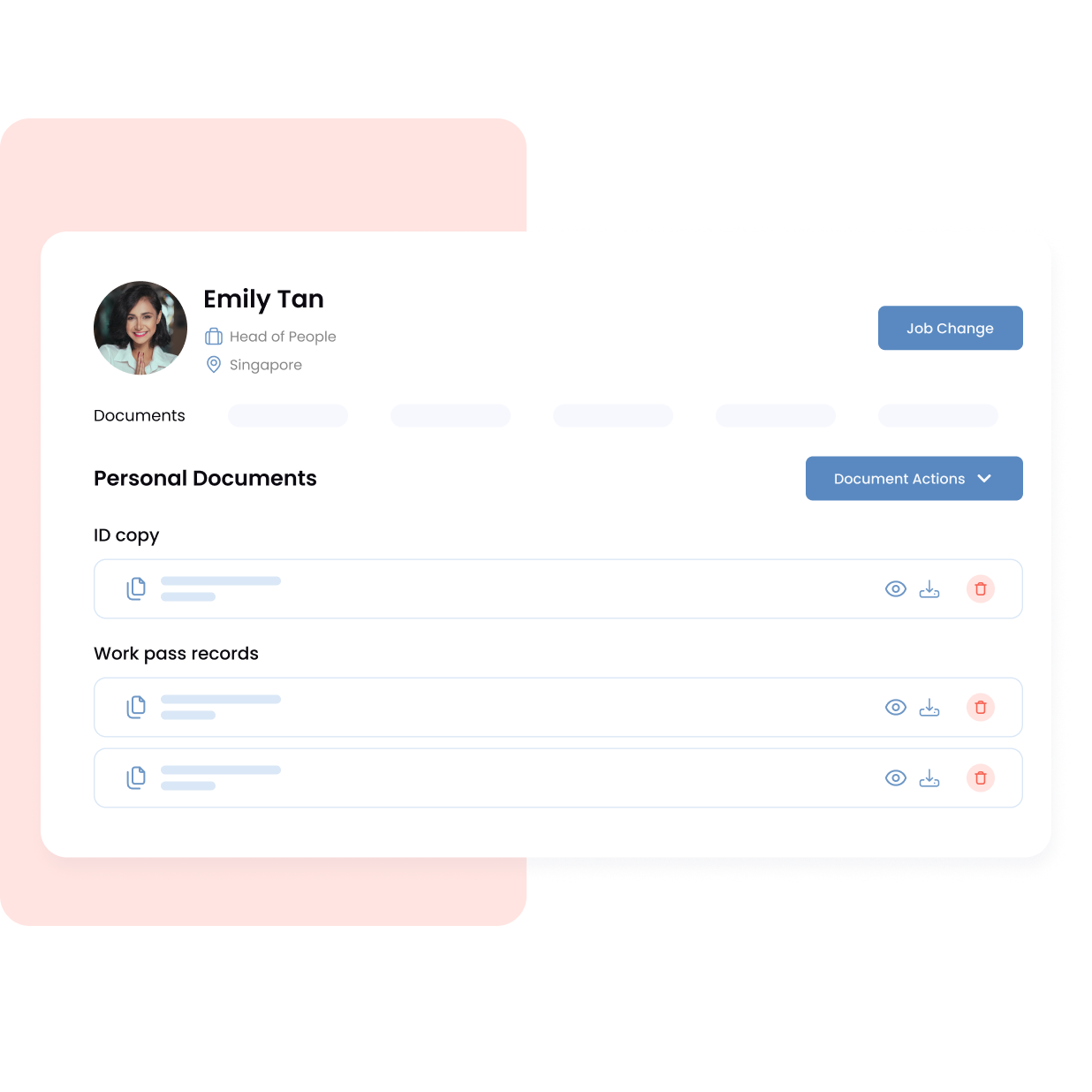
With Omni HR, each foreign employee’s pass type, pass number and expiry date sit in employee records, alongside their current salary. Supporting documents are stored in document management. Automated workflows trigger renewal tasks well before expiry, so the 2027 and 2028 threshold dates don’t catch your team out.
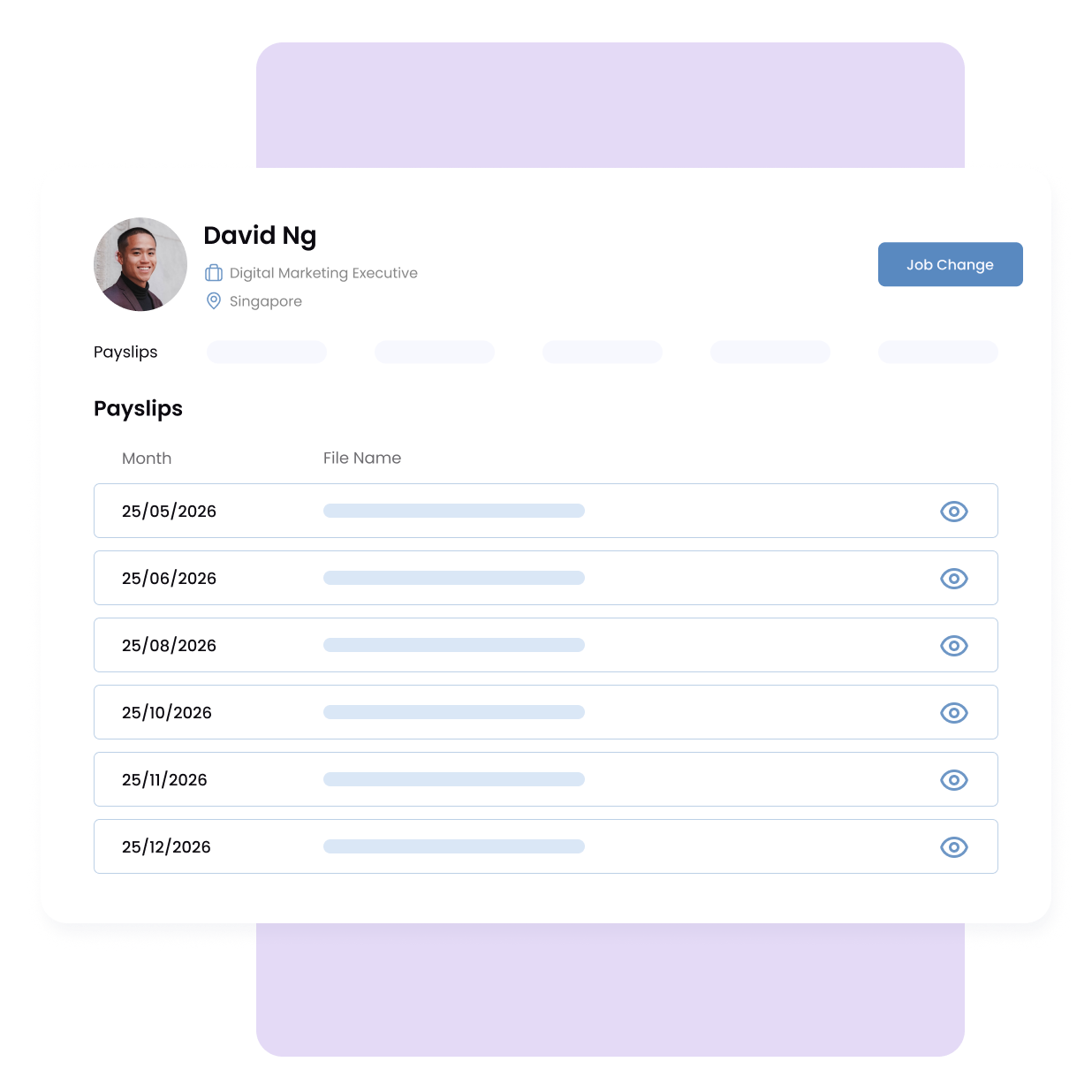
Omni HR also supports multi-country payroll in Singapore, Malaysia, the Philippines, Indonesia, Vietnam and Thailand, the salary you declare on the application is the salary you actually pay. That’s the evidence Thailand’s BOI and Malaysia’s ESD check at renewal. Before January 2027, reports and analytics can list every EP and S Pass holder whose salary falls below the new floors, so you can plan reviews by market and by renewal date.
"It helps us both from a compliance and security standpoint. And on top of that is also efficiency, we no longer need to toggle between two or three other systems to onboard employees."
— Jack Ang, Head of People at Lucence
If you don’t yet have an entity in a market, Omni HR’s Employer of Record can sponsor the pass and employ your hire locally. See our comparison of EOR services for APAC teams.
Frequently Asked Questions
Of these six markets, Singapore has the highest entry-level floor for professionals: S$5,600 a month for an Employment Pass, rising to S$6,000 for new applications from 1 January 2027. Malaysia’s top category, Category I, requires RM20,000 a month in basic salary.
From 1 January 2027, new EP applications need at least S$6,000 a month, or S$6,600 in financial services, with higher amounts for older candidates. Renewals follow the same floors for passes expiring from 1 January 2028.
Yes. The revised floors apply to all new and renewal Employment Pass applications submitted from 1 June 2026, so existing holders must meet the new band for their category when they renew.
No. The Philippines has no fixed salary threshold for an Alien Employment Permit. Instead, DOLE checks through a labor market test and an economic needs test that no qualified Filipino is available for the role.
The DKP-TKA is a compensation fund levy that employers in Indonesia pay for each foreign worker, set at USD 100 a month and usually paid upfront for the permit period. It’s paid after the foreign worker utilization plan (RPTKA) is approved.
Vietnam’s provincial authorities decide on a complete work permit application within 10 working days. Employers must file between 10 working days and 60 days before the worker’s start date under Decree 393/2026/ND-CP, effective 5 December 2026.