






















Summary. Employers ending employment in Singapore, Malaysia, the Philippines, Indonesia, Vietnam and Thailand face different statutory notice periods, severance formulas, payment deadlines and authority notifications in each market. Malaysia, the Philippines, Indonesia, Vietnam and Thailand set minimum severance by length of service, ranging from 10 days’ wages per year in Malaysia to 400 days’ wages in Thailand. Singapore leaves retrenchment benefits to contracts and negotiation. HR teams should budget severance by market before any restructuring and follow each notice and notification step in order. They should also track Indonesia’s new Manpower Protection Law, passed on 6 October 2026, and Singapore’s Workplace Fairness Act, expected by end-2027. Omni HR keeps service dates, salary history and contract terms in one employee database, and its multi-country payroll calculates final pay, prorated entitlements and statutory deductions in all six markets.
Ending employment is where cross-border compliance gets expensive. A wrong notice period can turn a lawful termination into a claim. Severance owed in one market can run to more than a year’s pay in another. On top of that, several markets require you to notify the labor authority before or after the termination.
This guide compares notice periods, severance formulas, payment deadlines and notification duties in six Southeast Asian markets including Singapore, Malaysia, the Philippines, Indonesia, Vietnam, and Thailand. Every figure links to the law or the labor ministry, and we’ve flagged what’s changing in 2026 and 2027.
Key takeaways
- Five of the six markets set statutory severance. Singapore is the exception where retrenchment benefits are set by contract or negotiation, and the norm is 2 weeks to 1 month’s salary per year of service.
- Thailand has the highest statutory severance: up to 400 days’ wages for 20 or more years of service.
- Indonesia’s severance is the most complex. Under Government Regulation No. 35 of 2021, it combines up to 9 months’ severance, up to 10 months’ service pay and compensation for rights, adjusted by the reason for termination.
- Notice ranges from 1 day to 8 weeks. That runs from Singapore’s minimums to Malaysia’s longer floors. Vietnam requires 45 days for indefinite-term contracts.
- Four markets require you to tell the labor authority about layoffs. These include Singapore, Malaysia, the Philippines and Vietnam.
How do notice periods and severance compare across Asia?
Notice is the advance warning either side must give before employment ends.
Severance (also called separation pay, retrenchment benefit or termination benefit) is the payment owed when the employer ends employment for reasons such as redundancy or closure. In most of these markets, an employee dismissed for proven misconduct, or one who resigns, is not owed statutory severance.
How much severance do you owe in each market?
Example scenario: A full-time employee made redundant after 2, 5 or 10 years of continuous service.
Note: Vietnam’s figures are worked out before deducting periods covered by unemployment insurance, which usually lowers what the employer pays.
For the full cost of employing people in each market, see how much it costs to hire in Asia.
Singapore: Notice Periods and Retrenchment Benefits
What is the minimum notice period in Singapore?
The employment contract sets the notice period. If not stated, the minimum notice depends on length of service:
Either side can pay salary in lieu of notice, and no Central Provident Fund (CPF) contributions are due on that payment. Annual leave can offset notice only if both sides agree. For more on how notice works in practice, see our guide to notice periods.
Is severance pay mandatory in Singapore?
No. Singapore has no statutory severance. A retrenchment benefit is the payment an employer makes when an employee’s role is made redundant. MOM says employees with at least 2 years of service are eligible, and the amount follows the contract or collective agreement, or is negotiated. The prevailing norm is 2 weeks to 1 month’s salary per year of service, and 1 month in unionized companies. Our Singapore retrenchment guide covers the full process.
Employers with at least 10 employees must notify MOM within 5 working days of telling any employee they’re being retrenched. Final salary is due on the last day of employment, or within 3 working days if that isn’t possible.
Malaysia: Notice and Termination Benefits
Under section 12 of the Employment Act 1955, minimum notice is:
- 4 weeks for less than 2 years of service
- 6 weeks for 2 to less than 5 years
- 8 weeks for 5 years or more
Contracts can set longer notice, and either side can pay wages in lieu.
Termination benefits are Malaysia’s statutory severance, set by the Employment (Termination and Lay-Off Benefits) Regulations 1980. Employees with at least 12 months of continuous service are entitled to them when the employer ends their employment, except for misconduct. The minimum rates are:
Part-years are prorated to the nearest complete month. You must pay termination benefits within 7 days of the termination date, with a written statement showing how the amount was calculated. For closures and redundancies, you must also notify the Labour Department using Form PK. Failing to do so is an offence under section 63 of the Employment Act, with fines of up to RM50,000.
Philippines: Separation Pay and The 30-Day Rule
The Labor Code of the Philippines splits termination into two routes:
- Just causes (Article 297): employee fault, such as serious misconduct or gross neglect. No separation pay is due, but Article 292(b) of the Labor Code requires written notice of the charge and a fair chance to respond, followed by a written notice of the decision.
- Authorized causes (Articles 298 and 299): business reasons or disease. You must give written notice to the employee and to the Department of Labor and Employment (DOLE) at least 30 days before the termination date, and pay separation pay.
A part-year of at least six months counts as a full year. For worked examples, see how to compute separation pay.
Employees who resign must give 30 days’ notice. Whatever the reason, DOLE requires employers to release final pay within 30 days of separation and to issue a Certificate of Employment within 3 days of a request. Final pay includes unpaid salary, separation pay, unused leave credits and the prorated 13th-month pay.
Indonesia: Severance, Service Pay and the New Manpower Protection Law
Government Regulation (PP) No. 35 of 2021 sets out what employers owe on termination (PHK). The employer must give written notice at least 14 working days before termination (7 working days during probation). The employee then has 7 working days to refuse in writing, which starts bipartite negotiation.
The payment has three parts:
- Uang pesangon (severance): 1 month’s wages for less than 1 year of service, rising by 1 month a year to 9 months for 8 years or more.
- Uang penghargaan masa kerja (service pay): 2 months’ wages from 3 years of service, rising to 10 months for 24 years or more.
- Uang penggantian hak (compensation for rights): for example, untaken annual leave.
The reason for termination changes the severance amount. Under PP 35/2021, an efficiency layoff to prevent losses pays 1 times the severance. Efficiency layoffs or closures due to losses, and bankruptcy, pay 0.5 times. Service pay stays at 1 times in these cases. For wider context, see our guide to Indonesian employment law.
What’s changing
On 6 October 2026, Indonesia’s House of Representatives (DPR) passed the Manpower Protection Law, following Constitutional Court Decision No. 168/PUU-XXI/2023. Manpower Minister Yassierli said severance will no longer be paid at a 0.5 multiplier, and the law creates a severance reserve fund for workers whose employers can’t pay. The law isn’t in force yet.
The Ministry of Manpower says it takes effect one year after it is enacted and promulgated, and in late October 2026 it was still awaiting the President’s signature. Until then, PP 35/2021 governs severance.
Vietnam: Notice, Severance and Job Loss Allowances
The Labor Code 2019 (No. 45/2019/QH14) sets the minimum notice an employer must give when ending a contract on lawful grounds:
- 45 days for indefinite-term contracts
- 30 days for fixed-term contracts of 12 to 36 months
- 3 working days for fixed-term contracts of less than 12 months
Vietnam has two separate payments, and which one applies depends on why employment ends:
- Severance allowance (Article 46): half a month’s salary per year worked. It applies to employees with at least 12 months of regular work whose contracts end for reasons such as contract expiry, mutual agreement or lawful unilateral termination.
- Job loss allowance (Article 47): 1 month’s salary per year worked, with a minimum of 2 months. It applies when employees lose their jobs because of restructuring, technology changes, economic reasons, mergers or divisions.
Both allowances leave out periods when the employee was covered by unemployment insurance, so the employer’s actual payment is often much lower than the headline formula. Salary is based on the average of the 6 months before termination. Before a restructuring layoff affecting multiple employees, you must consult the workplace worker representative organization, if there is one. You must also notify the provincial People’s Committee and the affected employees 30 days in advance. All amounts owed must be settled within 14 working days of termination, extendable to 30 days in listed cases.
Thailand: Severance Under the Labour Protection Act
For indefinite contracts, Thailand’s Labour Protection Act requires notice of at least one pay period. Employers can end employment immediately by paying wages in lieu of notice, which must be paid on the termination date.
Severance under section 118 applies to employees with at least 120 days of continuous service who are terminated other than for serious misconduct. The 2019 amendment added a top tier for long-serving employees:
Thailand also sets special rules for redundancy caused by new machinery or technology. You must notify the labor inspector and the affected employees at least 60 days before the termination date, and pay special severance on top of the standard amount. Late payment of severance and other money owed carries interest of 15% a year.
The most recent amendment, the Labour Protection Act (No. 9) B.E. 2568, took effect on 7 December 2025. It extended maternity leave to 120 days and added parental leave, but left notice and severance unchanged.
For the payroll side of exits, see our guide to Thailand’s Social Security Fund.
What’s changing for ending employment in 2026 and 2027?
Singapore
The Workplace Fairness Act covers dismissal along with hiring, appraisal and promotion. Employers can’t make these decisions based on age, nationality, sex, marital status, pregnancy, caregiving, race, religion, language, disability or mental health. Firms with fewer than 25 employees will initially be exempt. For retrenchment, the practical change is evidence: document how you chose the affected employees.
Indonesia
The new law is the biggest change in the region, but it won’t apply until a year after promulgation. Keep using PP 35/2021 for current terminations, and for restructuring planned in late 2027 or later, assume the 0.5 multiplier won’t be available.
Malaysia, the Philippines and Vietnam
No changes to statutory notice or severance have been announced. The rules above apply.
How do you keep employee exits compliant across six markets?
Exit compliance usually fails in three places: the wrong service date, a salary base that leaves out an element the law includes, and a payment made after the deadline. All three depend on accurate employee and payroll data.
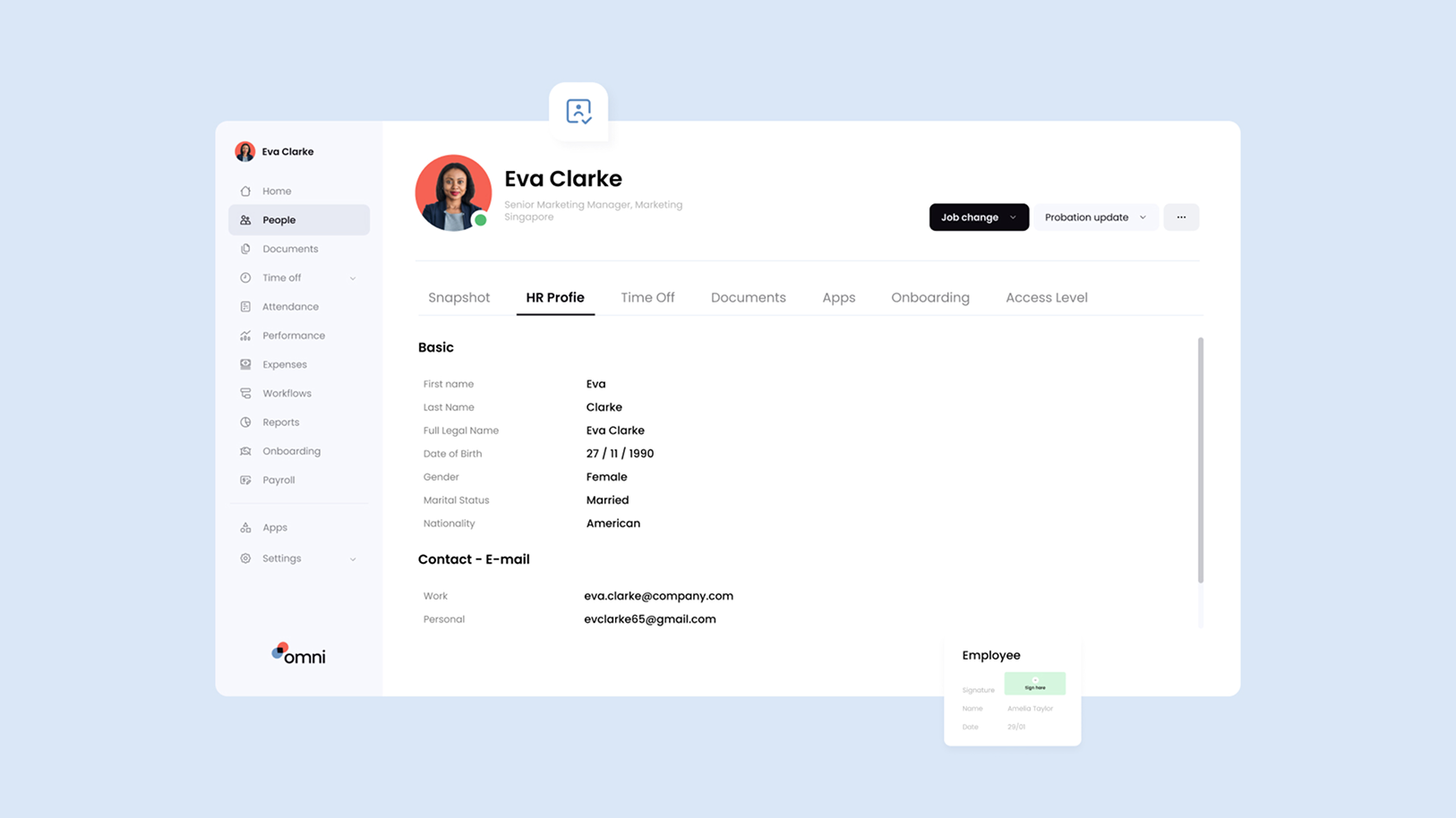
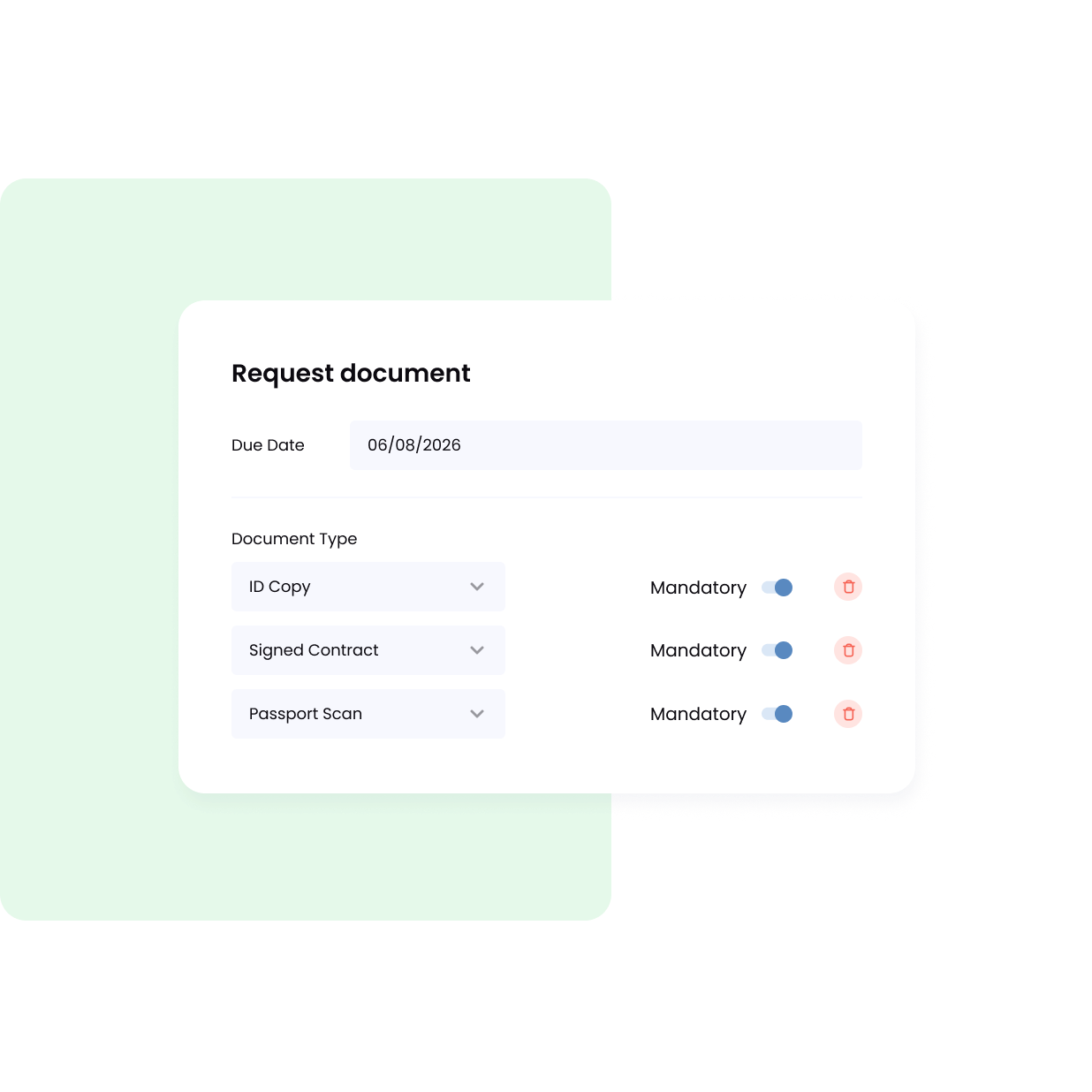
In Omni HR, each employee’s start date, contract type, notice terms and salary history sit in their employee record, so length of service is calculated from a single source of truth. Automated workflows take offboarding through each market’s sequence: notice, approvals, authority notifications and document collection. Signed letters and Form PK copies are stored in document management for audits.
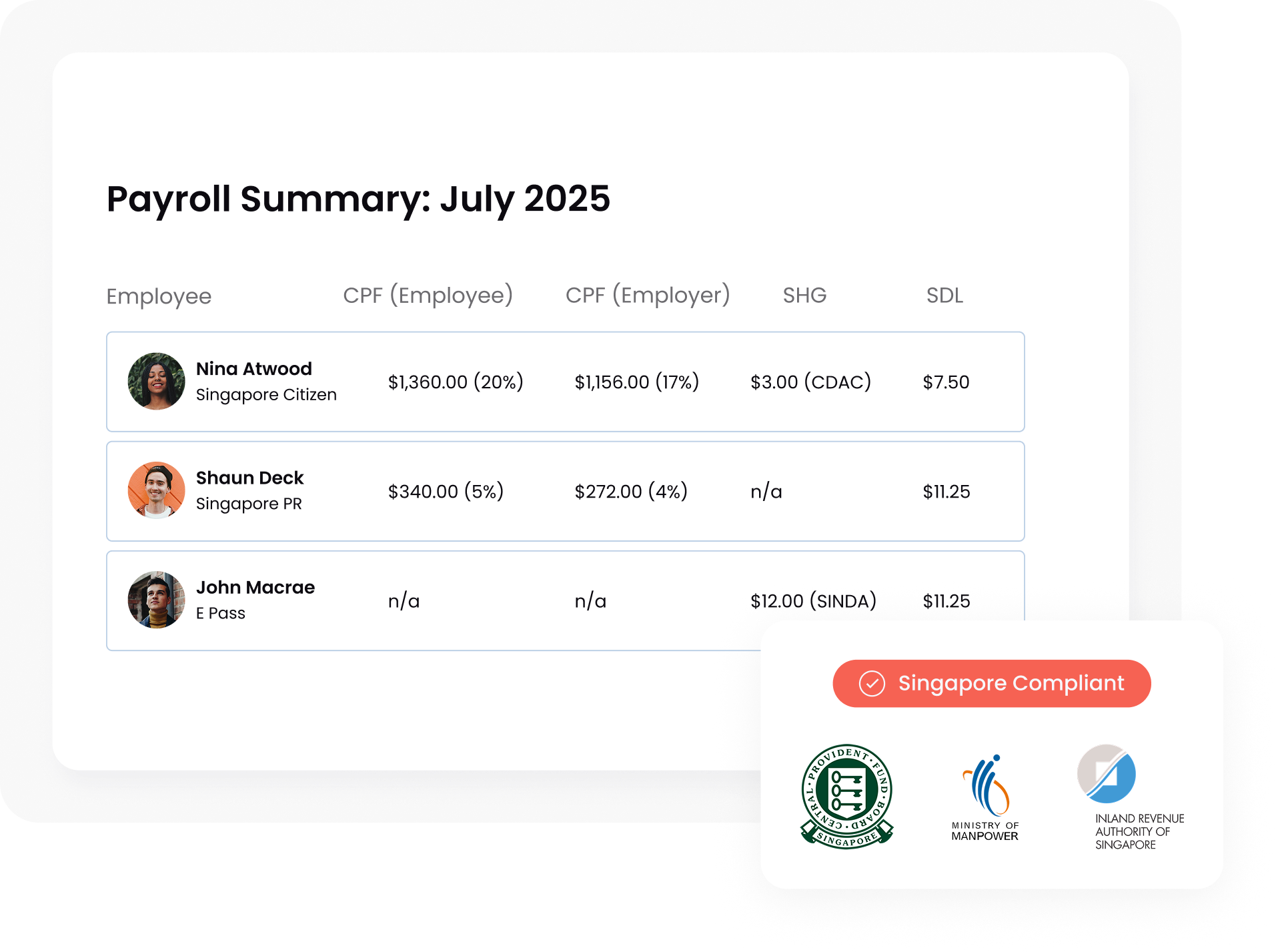
Omni HR’s multi-country payroll runs final pay in Singapore, Malaysia, the Philippines, Indonesia, Vietnam and Thailand. It includes prorated leave, the Philippine 13th-month pay and statutory deductions, so final pay goes out within the 7-day, 14-working-day and 30-day deadlines in each market. Before a restructuring, reports and analytics can estimate statutory severance by market and service band, so finance can budget the full cost.
Omni HR brings employee records, offboarding workflows and multi-country payroll for all six markets into one platform, so every exit is calculated accurately and paid on time. Book a demo to see how it works for your team.
Hiring without a local entity? Omni HR’s Employer of Record handles compliant terminations as the legal employer. For more on how employment rules differ across the region, see hiring across Asia.
Frequently Asked Questions
Of these six markets, Thailand has the highest severance for one payment type, at up to 400 days’ wages after 20 years of service. Indonesia often costs more in total for mid-tenure employees, because severance and service pay are combined.
No. Singapore has no statutory severance pay. Retrenchment benefits follow the employment contract or collective agreement, or are negotiated. MOM’s prevailing norm is 2 weeks to 1 month’s salary per year of service for employees with at least 2 years of service.
Malaysian employees with at least 12 months of continuous service receive 10 days’ wages per year of service if they served less than 2 years, 15 days if they served 2 to 5 years, and 20 days if they served 5 years or more. Payment is due within 7 days of termination.
When an employer lawfully ends a contract in Vietnam, it must give 45 days’ notice for an indefinite-term contract, 30 days for a fixed-term contract of 12 to 36 months, and 3 working days for a contract of less than 12 months.
Yes, but not yet. Indonesia’s House of Representatives passed the Manpower Protection Law on 6 October 2026, and the government says the 0.5 severance multiplier will no longer apply. The Ministry of Manpower says the law takes effect one year after it is promulgated, so PP 35/2021 still sets severance in the meantime.
Generally not. Resigning employees in Singapore, Malaysia, the Philippines and Thailand aren’t owed statutory severance unless their contract says otherwise. Vietnam is an exception: employees with at least 12 months of service who end their contract lawfully may receive a severance allowance.