.png)
Summary. An AI agent is a system that perceives a trigger, reasons against your HR data and policies, and takes autonomous action, not a chatbot that waits for a prompt. For HR teams across Singapore, Malaysia, the Philippines, Indonesia, Hong Kong, and other APAC markets, agentic AI can run onboarding, payroll checks, and compliance monitoring end to end. We break down what AI agents are, 8 ways HR teams use them, and what to look for in a platform built for APAC's compliance complexity.
What is an AI Agent?
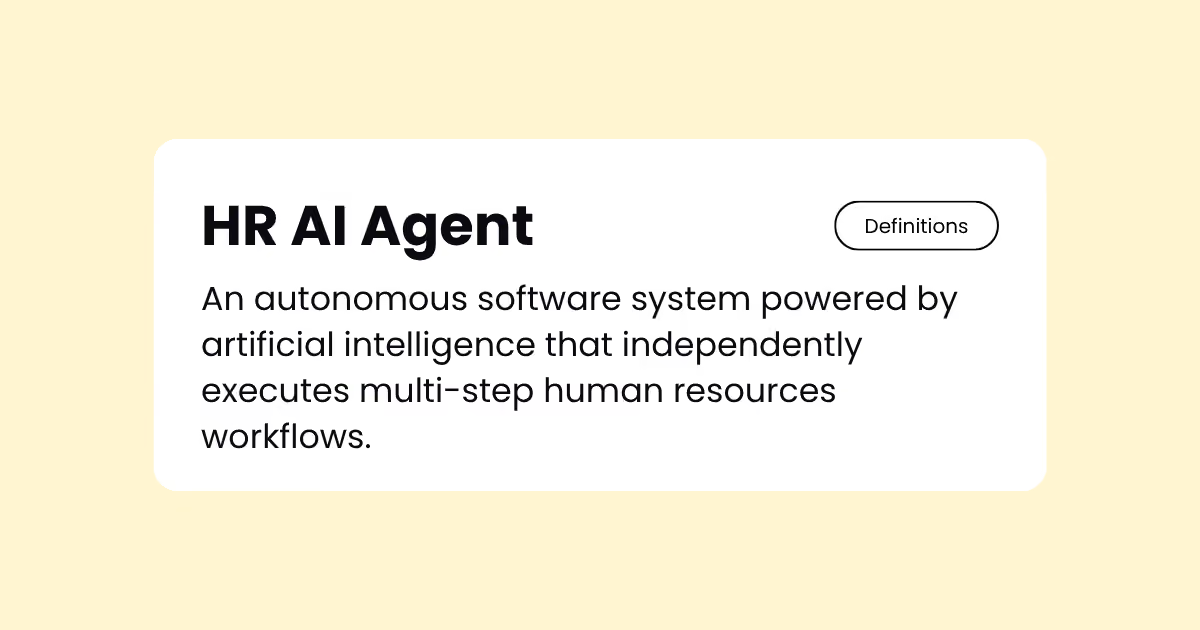
An AI agent is a system that perceives an input, reasons about it against a set of data and rules, and takes autonomous action, without a human manually completing each step. This is different from a chatbot, which only responds to prompts it's given and can't independently decide what to do next.
Agentic AI is the broader term for this approach: AI that plans, decides, and executes multi-step tasks toward a goal, rather than just generating a response.
An HR AI agent receives a trigger, processes it against HR policies and employee data, and executes the appropriate action without manual input.
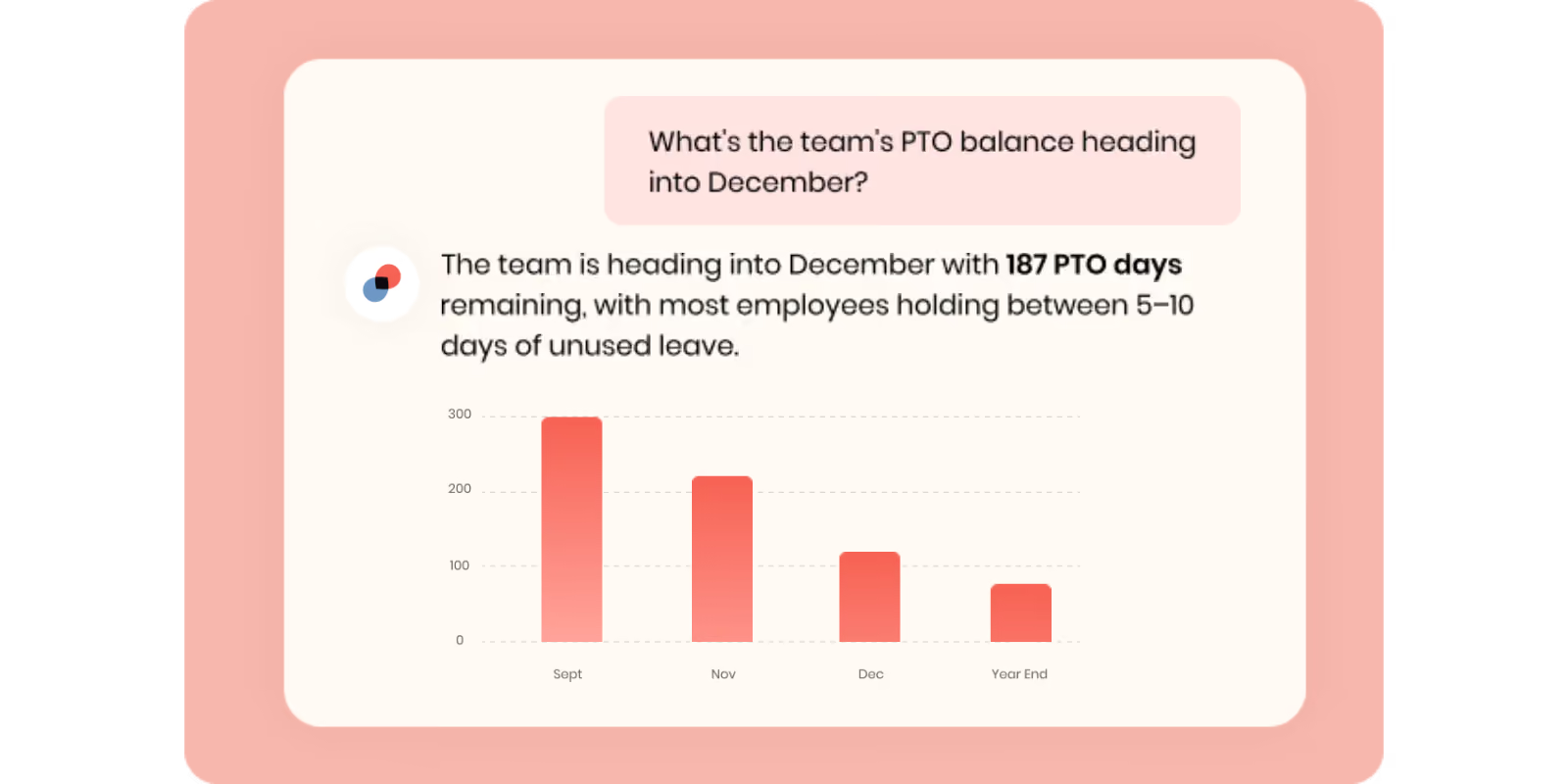
For example, Mino, Omni's AI agent, reads live HR and employee data and gives a direct answer when you ask it something like "how’s the team PTO looking" or "what's the attrition rate this month," instead of sending you digging through reports.
AI agents differ from two things HR teams already use:
How Are AI Agents Different From Regular HR Automation?
Regular automation follows fixed rules. AI agents reason, act, and adapt to context where an if/then rule can't anticipate.
Take a leave request for example. A rules-based system routes it to a manager for approval. An AI agent checks current staffing levels, validates the employee's remaining leave balance, flags a scheduling conflict if one exists, and proposes or executes a resolution, all without a human triggering each step.
Traditional automation vs. AI agent
8 Ways HR Teams Can Use AI Agents
Interest in agentic AI has moved quickly: the parent term "agentic AI" now pulls 101,000 searches a month, as HR and business leaders look past chatbots toward systems that can actually complete work. Here's where agentic AI applies directly to HR operations:
1. Onboarding
Trigger task sequences, send documents, provision system access, and answer new hire FAQs automatically once a hire is confirmed.
2. Talent acquisition
Filter applicants against a role profile, schedule interviews, communicate with candidates, and assist in assessment scoring.
3. Payroll data collection
Chase missing inputs from managers, flag anomalies before a payroll run, and complete pre-payroll checks.
4. Leave and attendance
Approve or escalate requests automatically based on policy, balance, and staffing levels.
5. Compliance monitoring
Track contract renewals, statutory deadlines, and document expiry, especially critical for multi-country APAC teams managing CPF, EPF, SSS, and BPJS obligations across markets.
6. Performance management
Schedule reviews, collect manager and peer inputs, draft summaries, and identify coaching needs and growth opportunities.
7. Learning and development
Personalize development pathways to individual goals and skill gaps, and nudge employees to complete learning actions.
8. HR analytics and workforce planning
Ingest workforce and business data to run planning scenarios, build skill forecasts, and detect talent gaps before they become hiring emergencies.
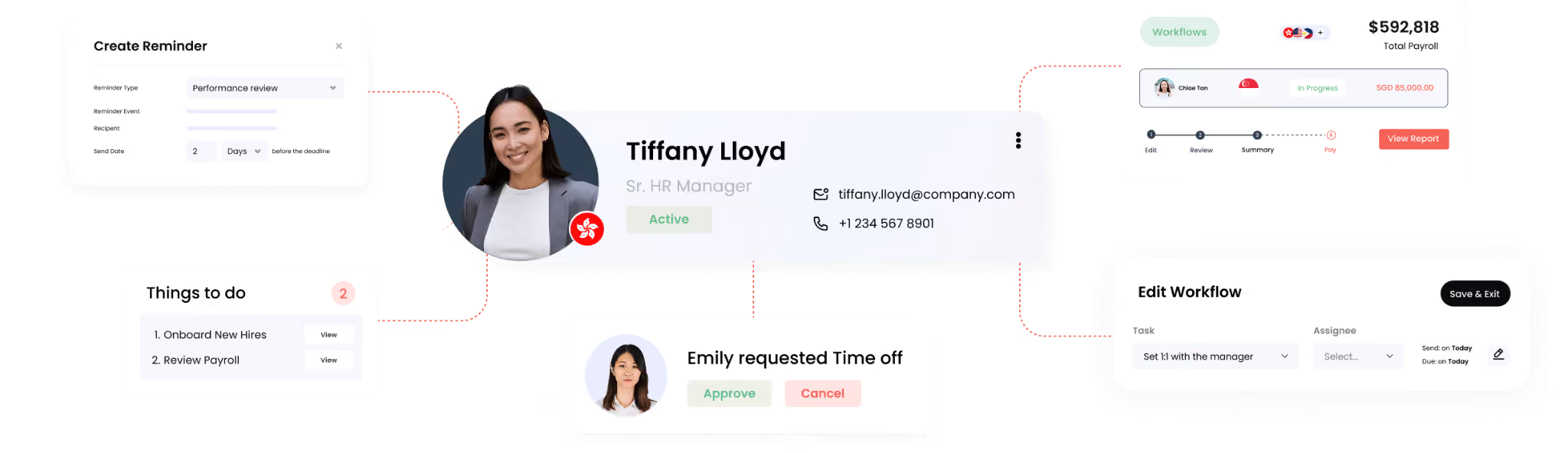
Omni's workflow automation already handles rule-based trigger-and-action automation for workflows like recruitment and leave; Mino adds the reasoning layer for questions and analysis on top of that data.
What Are the Benefits of AI Agents for HR Teams?
AI agents give HR teams back time, reduce manual error, and let a fixed headcount support more employees without adding headcount.
- Time savings. Agents complete multi-step admin work that used to require manual coordination across systems.
- Error reduction. Fewer manual re-entries means fewer compliance misses and payroll discrepancies.
- Scalability. The same HR team supports more headcount without proportionally growing the team.
- Better decisions. Agents ingest data across systems to surface insights HR managers can act on immediately.
- Employee experience. Faster responses and 24/7 availability for self-service queries like leave balances or policy questions.
- Strategic shift. HR moves from administrative execution to advisory, freeing HRBPs to focus on people strategy.
Omni HR customers are already seeing this shift. Execo cut data errors by 67% after automating payroll data flows with Omni, SleekFlow reduced payroll processing time by 40%, and Lucence cut payroll processing time by 50%.
See why businesses choose Omni
Is Agentic AI Ready for HR Teams in Asia?
Yes, but only on platforms built with APAC's statutory complexity as core architecture, not an add-on. Multi-country compliance is the deciding factor.
HR teams operating across Singapore, Malaysia, the Philippines, Indonesia, and Hong Kong each navigate distinct statutory rules: CPF contributions in Singapore, EPF and SOCSO in Malaysia, SSS and PhilHealth in the Philippines, and BPJS in Indonesia. An AI agent that doesn't understand these frameworks natively will either make compliance errors or require constant manual correction, defeating the purpose.
Why generic global HR AI tools fall short in Asia: most are built for Western compliance frameworks first, with local statutory logic bolted on later or missing entirely.
What to look for in an agentic HR platform for APAC
We built Omni HR specifically for this problem: modern automation combined with local compliance logic across Singapore, Malaysia, the Philippines, Indonesia, and Hong Kong, in one platform.
Best Practices for Using AI Agents in HR
Agentic AI works best when people stay in control of outcomes, not just aware of them.
- Keep humans at the helm. AI agents should be directed, reviewed, and governed by people. Human-in-the-loop oversight is non-negotiable for sensitive decisions like hiring, promotion, and performance.
- Break roles into discrete tasks before deploying agents. Map out which parts of a process are repeatable and rule-bound versus which need human judgment, then decide where an agent can own a task outright, assist with it, or stay out of it entirely.
- Align agents to business outcomes, not just task completion. An onboarding agent should maximize new hire productivity, not just check off a task list.
- Connect agents to your existing systems. Agents with access to more HR data and integrated tools produce better outcomes. Don't run them in isolation.
- Invest in AI literacy across the team. HR teams that understand how agents reason are faster to catch and correct errors.
- Audit regularly. Review agent decisions and behavior on an ongoing basis, and prioritize explainability, especially for talent management and workforce planning decisions.
Where Omni HR Fits in Your Agentic AI Journey
We built Mino directly into our core HRIS rather than bolting it on as a separate tool. Mino works across three areas:
- Answers direct questions about payroll, compliance rules by market, and headcount or leave data
- Analyzes your workforce data to build dashboards, flag early attrition risk, and compare cost and performance across markets
- Acts on specific tasks, like shortlisting and ranking candidates or starting a new hire's onboarding from inside the chat
For APAC teams operating under strict data protection laws like PDPA and the Philippines Data Privacy Act, we know how critical data security is, especially when it comes to sensitive employee data. Mino doesn’t send your raw employee records to an eternal language model. Instead, it queries your data schema, applies Omni’s existing access controls, and only passes the query result, not the underlying records, to the model for analysis. Get the technical deep dive into how Mino works.
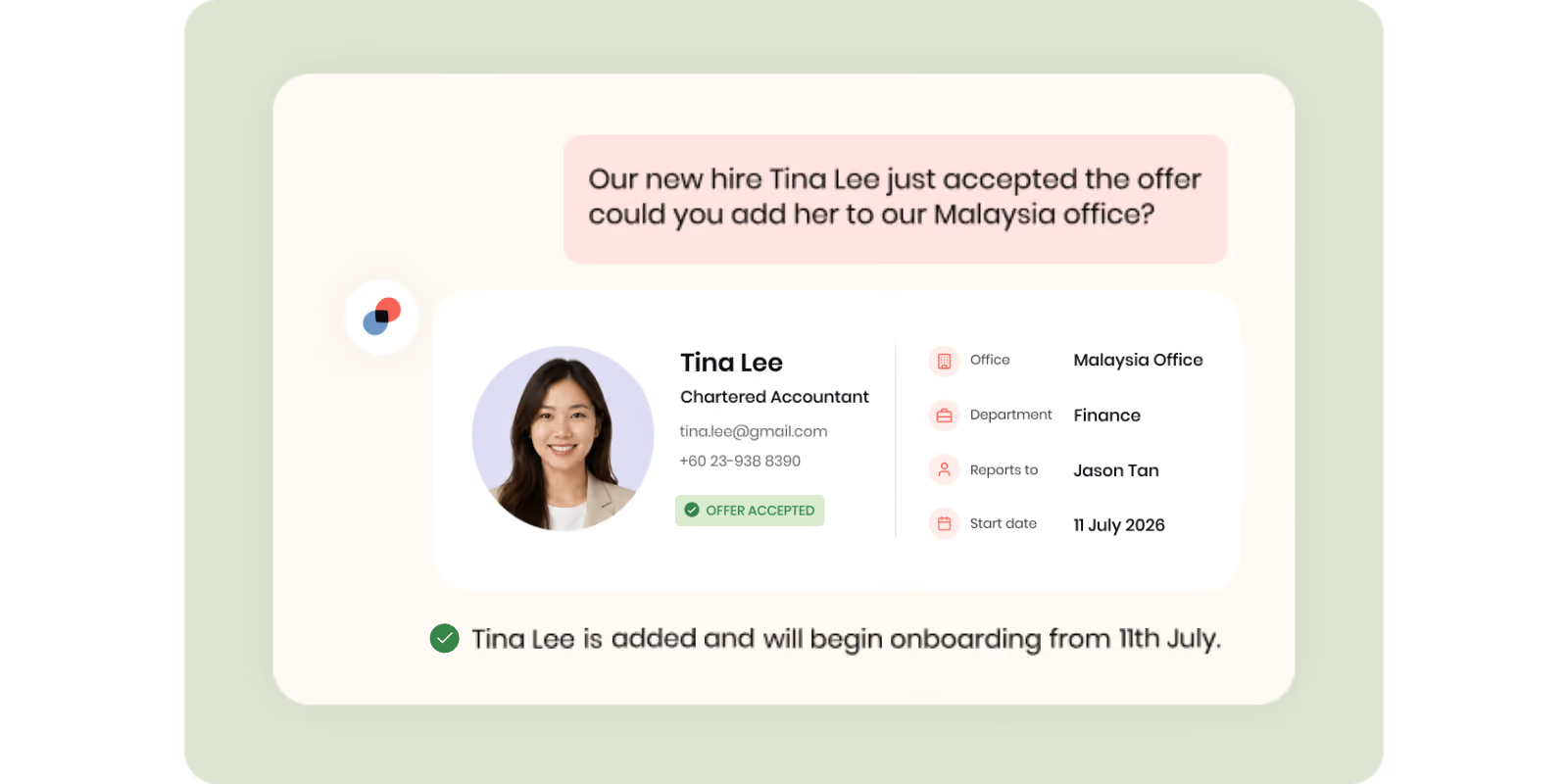
Alongside Mino, Omni's workflow automation and multi-country payroll automation already handle the rule-based side of agentic HR, the kind of trigger-and-action logic that doesn't need reasoning to run reliably.
Ready to See AI-Powered HR Automation in Action?
AI agents are moving HR from reactive administration to proactive, autonomous operations. Instead of chasing payroll inputs or manually routing leave requests, HR teams can hand off multi-step, rule-bound work to a system that reasons through it and acts.
As agents take on more of this work, HR's role shifts too: from running individual processes to overseeing how people and agents work together across the employee lifecycle. Teams that get ahead of this now, rather than treating agentic AI as a future problem, will spend less time on correction later.
For APAC teams managing complexity across multiple countries and compliance frameworks, the right platform makes the difference between an agent that helps and one that creates more manual correction work. We built Omni HR and Mino to handle that complexity natively.
Book a demo with our team today to see how Mino can transform your HR workflows.
Frequently Asked Questions
An AI agent for HR is a system that perceives a trigger, such as a new hire or a leave request, reasons against HR policies and employee data, and executes the appropriate action without manual input. Omni's AI agent, Mino, works this way inside Omni's core HRIS.
A chatbot only responds to prompts it receives. An HR AI agent reasons about a trigger and takes multi-step action on its own, like validating a leave balance and resolving a scheduling conflict, rather than just answering a question about one.
AI agents can handle onboarding task sequences, candidate screening, payroll data collection and anomaly checks, leave approvals, compliance deadline tracking, performance review scheduling, and workforce planning. Omni's AI agent, Mino, currently in early access, covers a first set of these: answering payroll and compliance questions, building workforce dashboards, flagging attrition risk, shortlisting candidates, and starting onboarding from chat.
Agentic AI is safe when human-in-the-loop oversight is built in for sensitive decisions like hiring, promotion, and performance, and when the platform is transparent about what data an agent can access and act on. Look for architecture that doesn't send raw employee records to a language model. Omni's AI agent, Mino, queries your data schema and applies access controls before any result reaches the model, so raw PII is never transmitted to a hosted LLM.
Look for local statutory rules built into the platform, multi-country payroll support, in-region support, and proven integrations with your existing HCM and payroll tools. Omni HR combines all four for teams operating across Singapore, Malaysia, the Philippines, Indonesia, and Hong Kong.
Yes. Agentic AI lets a smaller HR team support more headcount without proportionally growing the team, which matters most for SMEs and scaling companies managing multi-country growth across APAC with limited HR headcount.
Omni HR's AI agent, Mino, works inside Omni's core HRIS to answer payroll and compliance questions, build workforce dashboards, flag attrition risk, shortlist candidates, and start onboarding from chat, across Singapore, Malaysia, the Philippines, Indonesia, and Hong Kong. See how Mino works or explore Mino directly.
.png)


.png)
.avif)