.png)
Summary. Agentic AI in HR is a system that plans, decides, and acts across multi-step HR workflows with minimal human input, not just a chatbot that answers questions. The agentic AI in HR workflows market is projected to grow from $3.63 billion in 2026 to $9.80 billion by 2031, and Asia-Pacific is set to grow faster than any other region. This guide walks through 10 practical use cases, real examples, and how we built each one into Omni HR for multi-country APAC teams.
HR teams across Singapore, Malaysia, the Philippines, Indonesia, and Hong Kong are still buried in admin: chasing payroll inputs, answering the same policy question five times a week, manually stitching together onboarding paperwork for a new hire in a different country than the last one. Meanwhile the strategic work, the workforce planning and the retention strategy, waits.
Agentic AI changes that. This isn't the AI chatbot that answers "what's our parental leave policy?" and stops there. Agentic AI takes the next step: it checks the employee's location and tenure, applies the correct statutory entitlement, and triggers the leave request workflow without anyone touching a spreadsheet.
Below are 10 practical use cases for agentic AI in HR, each with a real-world example and how we make it work for APAC teams specifically.
What Is Agentic AI in HR?
Agentic AI in HR is an AI system that doesn't just respond to prompts. It plans, decides, and acts across multi-step HR workflows with minimal human oversight, adapting to context as it goes.
The difference from a standard HR chatbot comes down to action. A chatbot answers "what's the parental leave policy?" and stops there. Agentic AI answers the question, checks the employee's location and tenure, applies the correct statutory entitlement, and triggers the leave request workflow automatically.
10 Ways HR Teams Can Use Agentic AI
1. Talent Acquisition and Recruitment
Agentic AI screens applicants against job requirements, schedules interviews, and communicates with candidates without a recruiter driving every step. LinkedIn's recruitment agents save recruiters a full workday every week by handling this kind of high-volume, repetitive work. For a regional HR team hiring across five countries at once, that's the difference between a two-week and a six-week time-to-fill.
The APAC challenge is consistency. A recruiter screening candidates in Singapore and the Philippines in the same afternoon needs to apply the right country-specific contract rules to each one, every time.
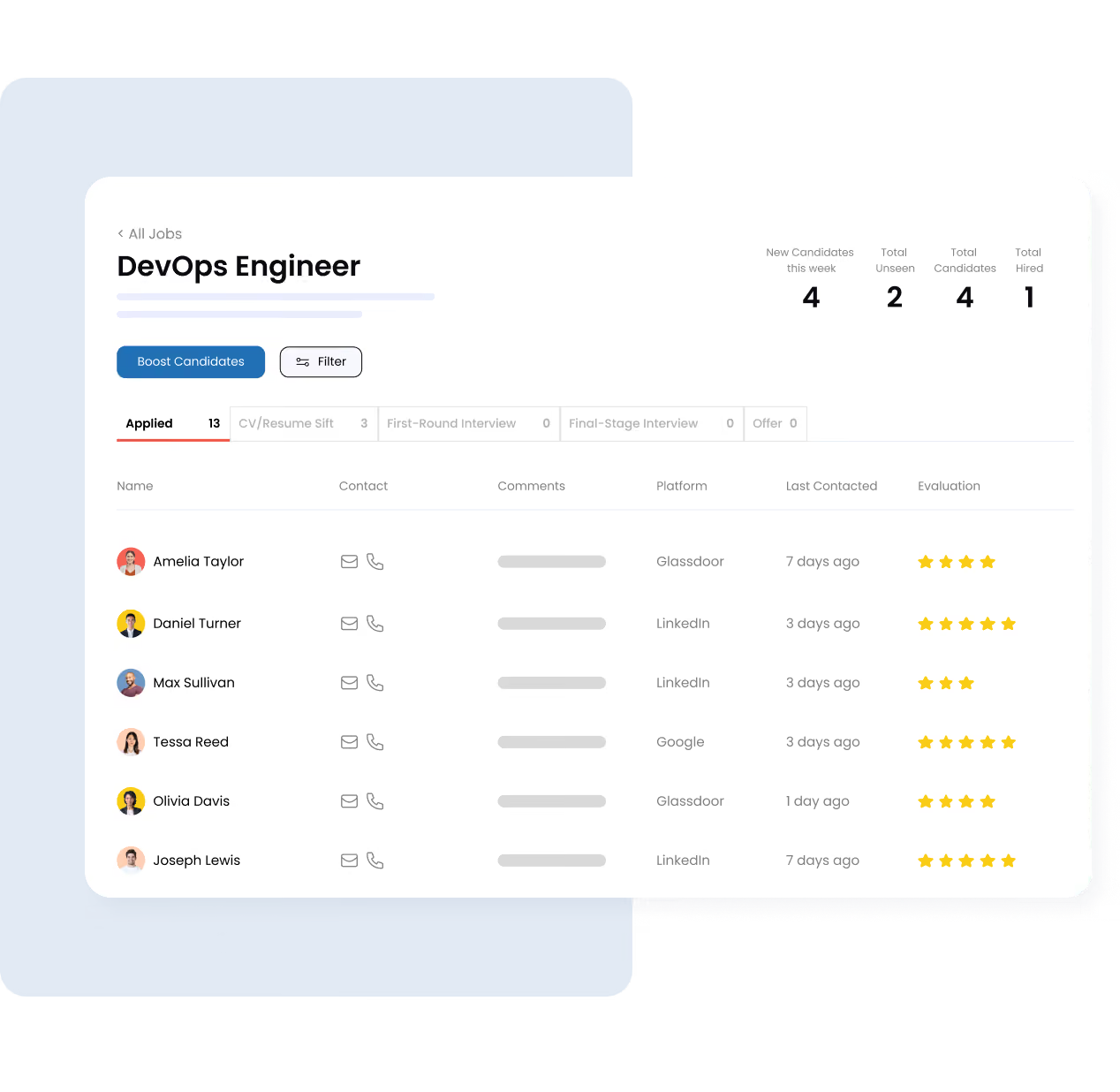
Omni’s ATS automates applicant tracking, interview scheduling, and candidate communications, and applies country-specific employment contract rules automatically so screening standards stay consistent no matter which market a candidate is in.
2. Employee Onboarding
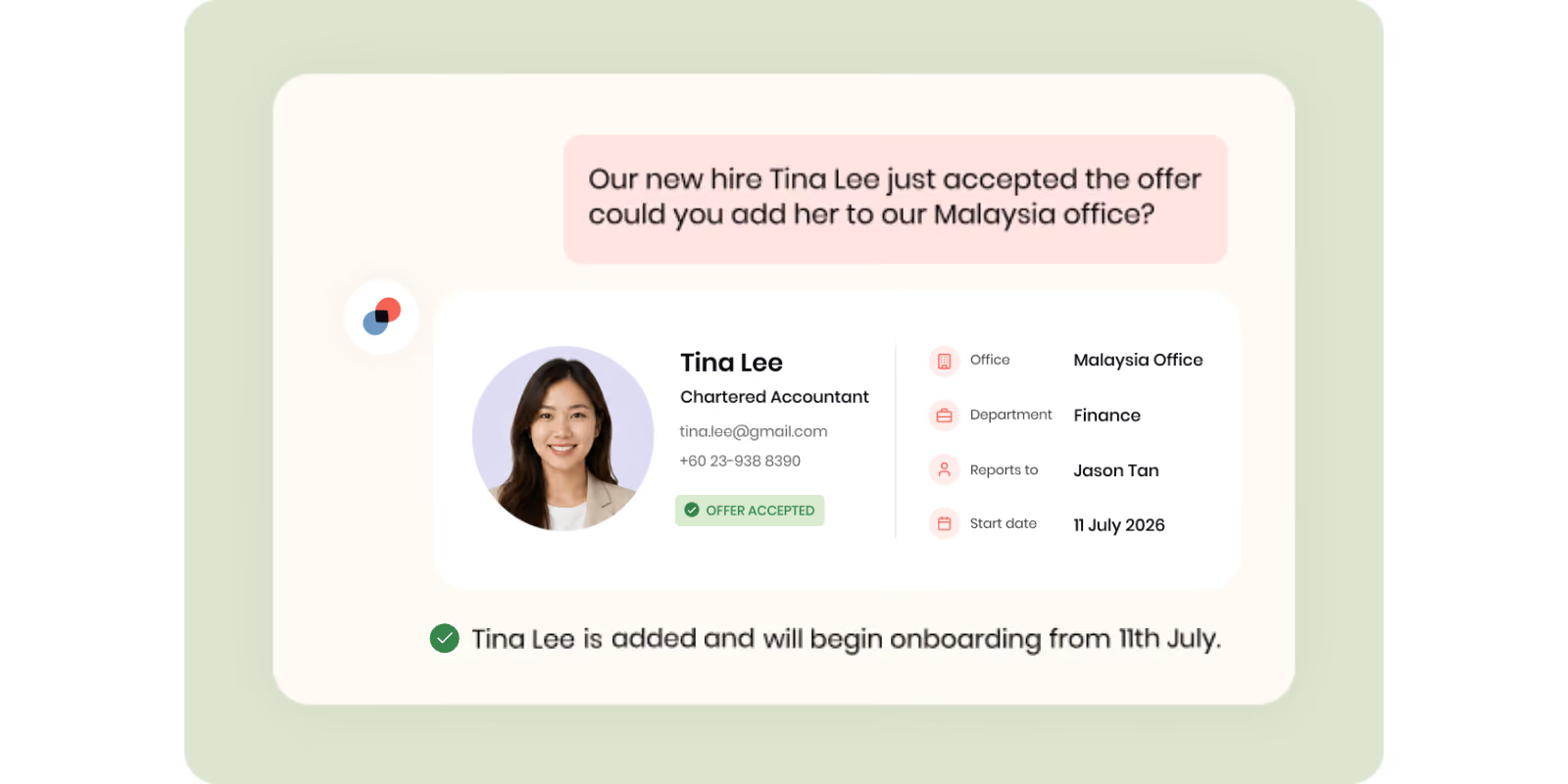
Onboarding is a sequence, not a single task. A proper process includes IT provisioning, document collection, manager introductions, benefits enrollment, and new-hire FAQs, all personalized by role, location, and manager. Agentic AI triggers this whole sequence the moment an offer is accepted. Reap achieved 5x faster onboarding after moving its onboarding workflows onto Omni.
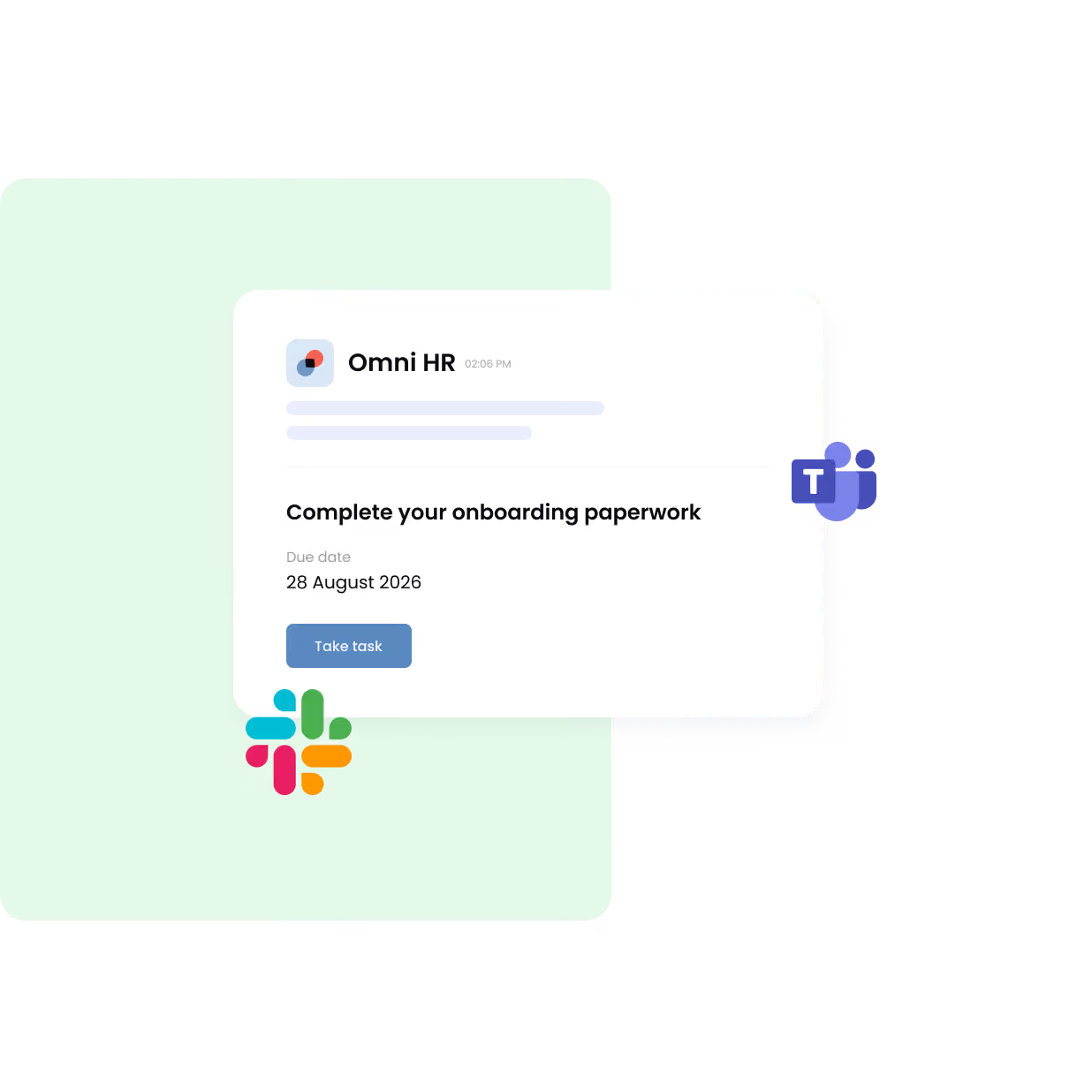
Our automated workflows handle document collection, task assignment, and system provisioning end to end, and generate the right country-specific statutory documents automatically so your team isn't manually tracking which form applies where.
3. Payroll Processing and Compliance
Payroll is where agentic AI earns its keep. Chasing payroll inputs, flagging anomalies before a run, checking calculations against statutory rates, and catching deadline misses before they become penalties. Lucence cut payroll processing time by 50% and SleekFlow cut it by 40% after automating this layer with Omni.
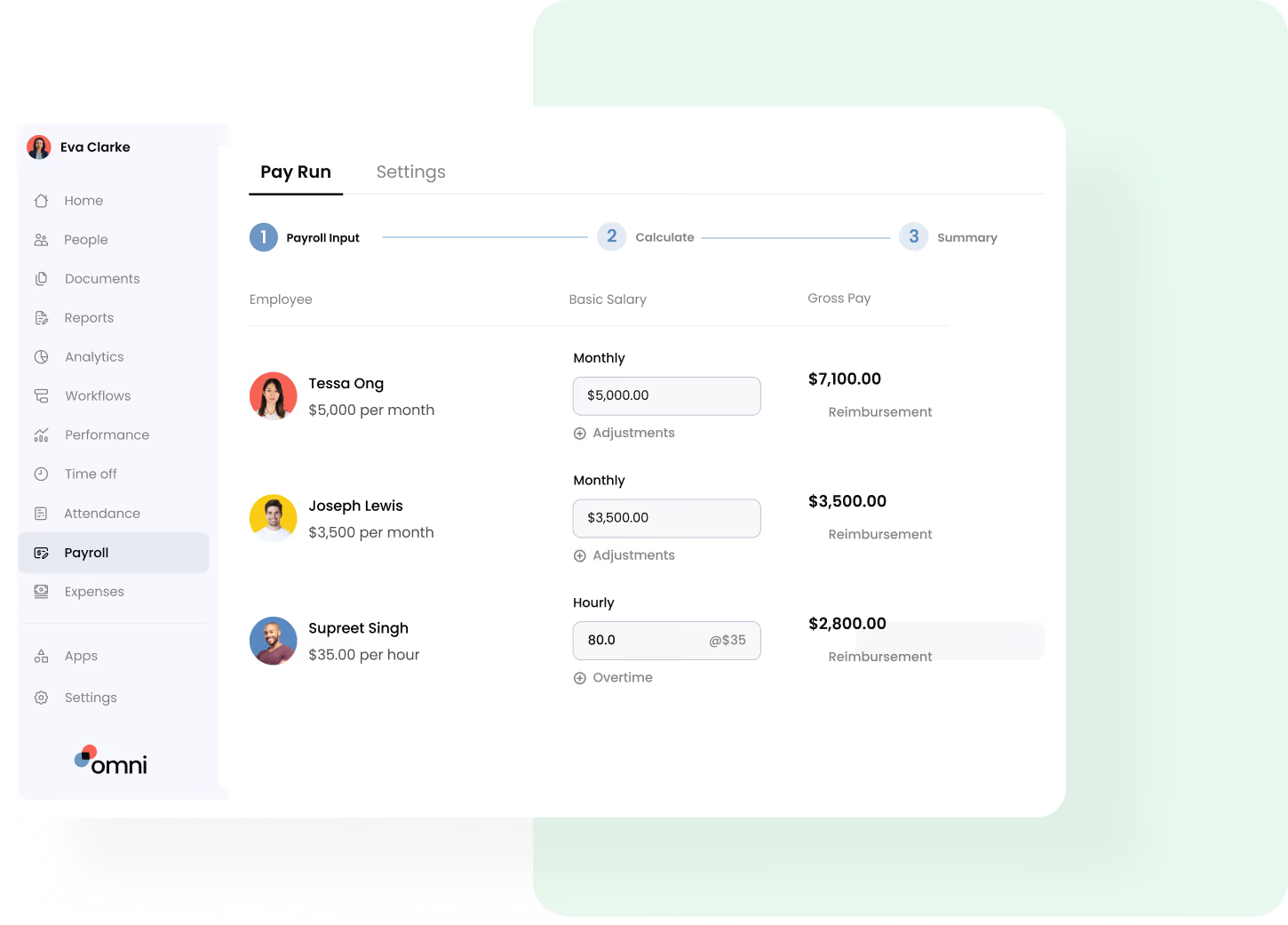
Our multi-country payroll runs these calculations automatically across 10+ APAC markets, so nobody on your team is manually working out a contribution rate at 11pm before a payroll deadline.
4. Leave and Attendance Management
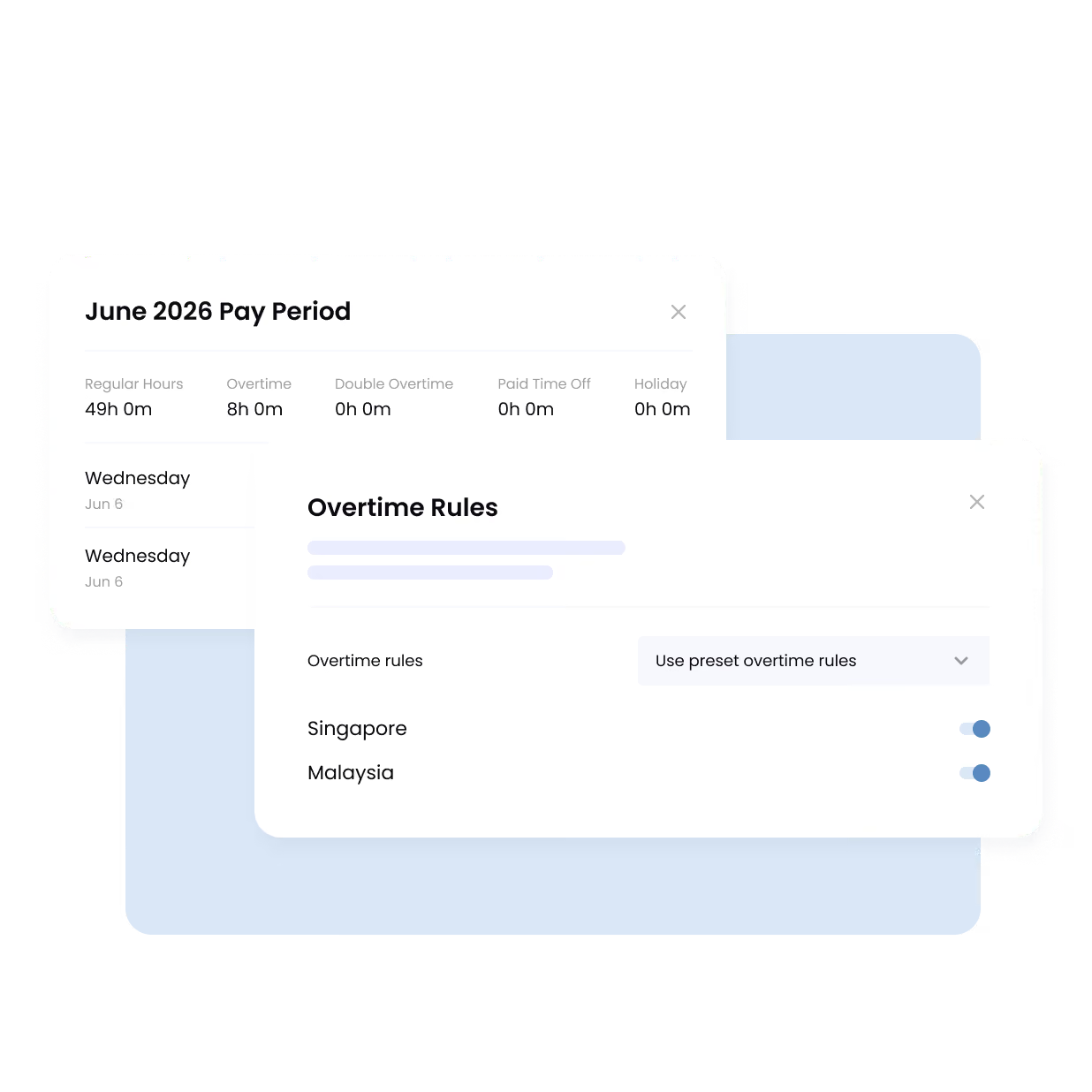
HR teams often spend hours each month manually processing attendance and leave data for payroll alone, not counting policy questions or entitlement checks. With Agentic AI, leave request approval or escalation are done automatically based on policy, scheduling conflicts, entitlement checking, and records are all updated in real-time.
Annual leave entitlements differ significantly across Singapore, Malaysia, the Philippines, and Indonesia, and HR shouldn't have to memorize each country's legislation to apply it correctly. Omni’s time off and attendance modules apply country-specific entitlement rules automatically and syncs with payroll in real time, so there's no manual bridging between the two systems.
5. Employee Self-Service
Without an established employee handbook or company policy, the same policy questions land in HR’s inbox weekly. What's the notice period, how many leave days are left, when does the next payslip come out - just to name a few.
Agentic AI fields these questions, confirms entitlements, and processes routine admin requests around the clock, without HR touching a single one.
For a multilingual, multi-country workforce, that also means answering in the right context. What counts as a public holiday in Malaysia isn't the same list as Singapore's, and an agent needs to know the difference.
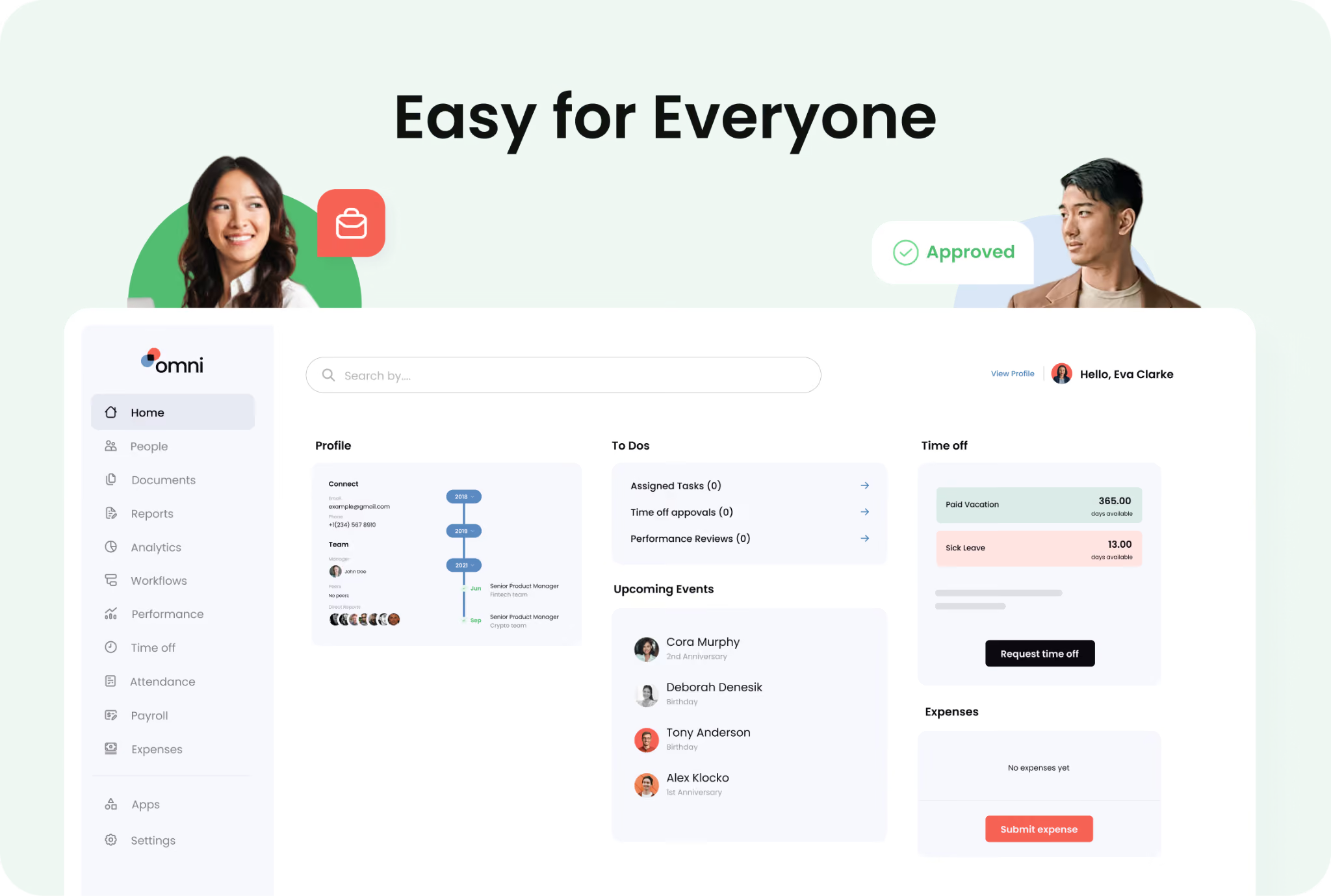
Omni’s employee self-service portal gives employees direct, always-on access to payslips, leave balances, and personal documents, cutting off HR admin queries at the source instead of routing every one through a person.
6. Performance Management
Agentic AI schedules review cycles, collects peer input, drafts summary reports, and flags employees who may need coaching or intervention, freeing managers to focus on the actual conversation instead of the logistics around it. Review cadences and feedback culture vary widely across Asia, and an agent that can be configured to follow local norms is worth more than one that forces a single global format.
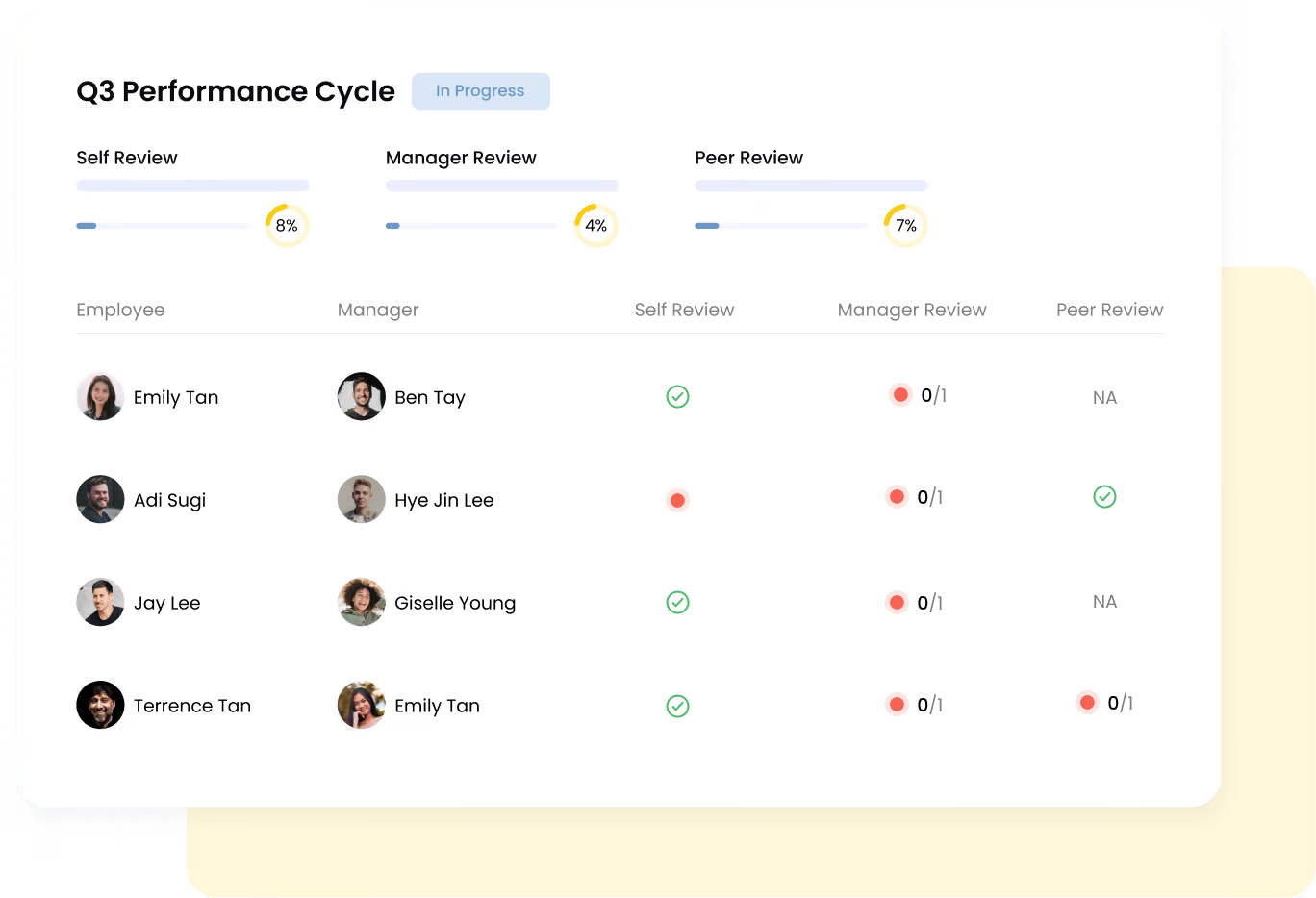
Omni’s performance management module automates review cycles, 360 feedback collection, and goal tracking, so HR teams run consistent cycles across every entity without manually chasing forms. Lucence also cut review cycle time from one month to three weeks after standardizing its process on Omni.
7. Employee Engagement and Retention
Disengagement rarely shows up as a single dramatic signal. It builds through fewer survey responses, shorter answers, quieter 1:1s. Agentic AI monitors those patterns and recommends interventions before disengagement turns into an exit interview. Hello Human reduced attrition by 15% after building structured, scalable HR operations on Omni.
Engagement drivers and attrition patterns differ by country and demographic across the region, which is exactly why a regional data picture beats a generic global benchmark. Our survey feature collects and surfaces engagement signals directly, and pairs with Omni's workforce analytics to flag retention risk before it becomes a resignation letter.
See the full regional picture in our 2026 Attrition Report.
8. Learning and Development
Asia-Pacific's learning management system market is growing fast, projected to be worth $25.46 billion by 2032. Agentic AI personalizes development pathways, nudges employees when a learning action is overdue, and surfaces skill gaps managers might otherwise miss.
We connect this directly to performance data rather than treating L&D as a standalone bolt-on. Our workflow automations and performance management module link goals to development actions, so a manager gets an automatic nudge the moment a development goal falls overdue, keeping growth plans active instead of forgotten in a review document.
9. HR Analytics and Workforce Planning
Regional HR teams often have zero visibility across countries because each entity runs its own spreadsheet. Agentic AI ingests workforce and business data to run headcount scenarios, forecast skill gaps, and surface insights HR can act on immediately instead of building from scratch. Execo reduced data errors by 67% after unifying its multi-country operations on Omni.
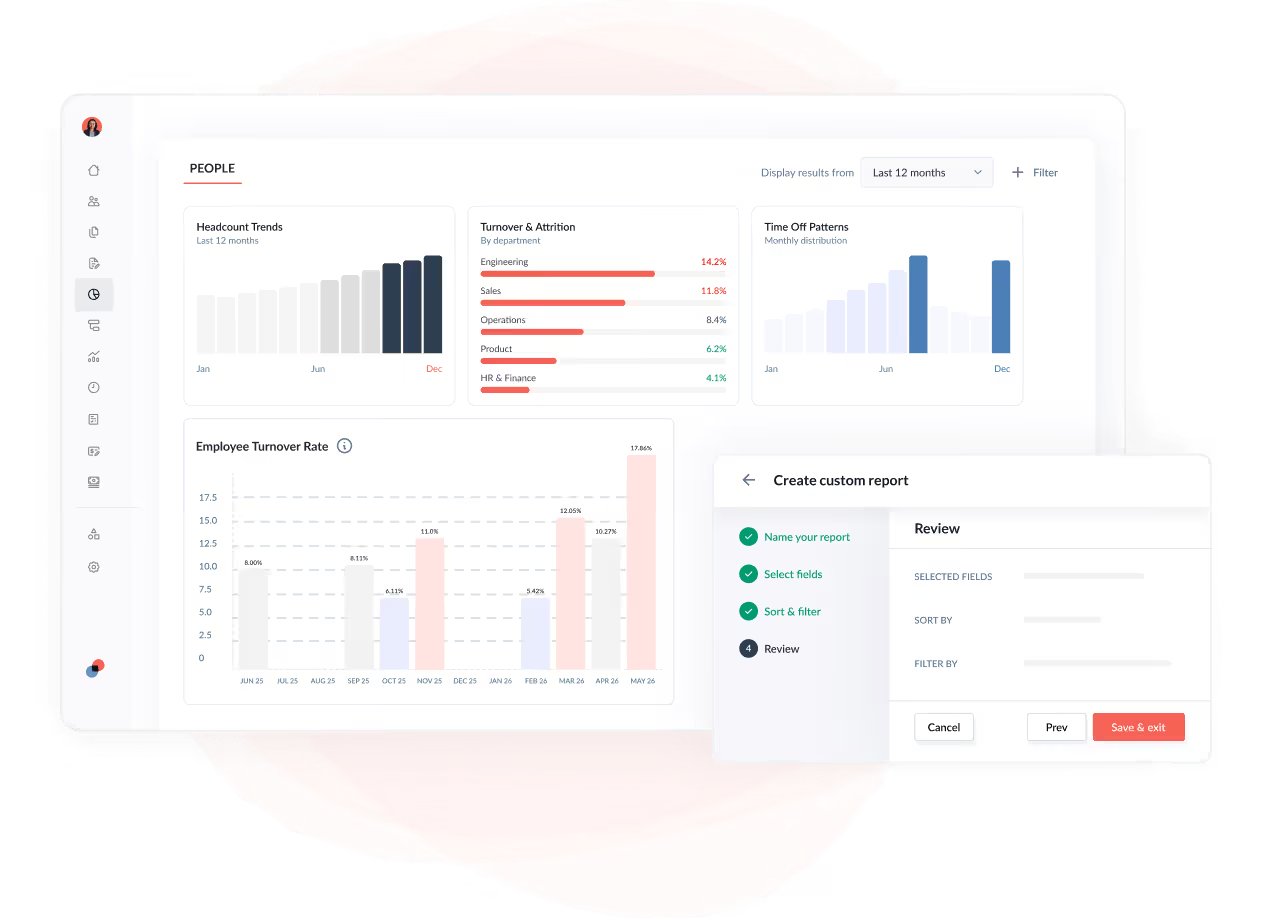
Omni’s report and analytics give HR leaders one unified view of workforce data across every APAC entity, closing the visibility gap that spreadsheets create between countries and teams.
10. Offboarding
A departing employee with unrevoked system access is a live security risk, not a paperwork problem. Malicious insider attacks, which include former employees who retain access after they leave, are the single costliest breach vector to remediate, averaging $4.92 million per incident against a global average of $4.44 million. Agentic AI triggers the exit workflow the moment a resignation is logged: equipment collection, system access revocation, final pay processing, and exit surveys, all without a manual checklist.
Omni handles offboarding task sequences automatically, including final payroll, document generation, and access removal, and applies the right country-specific rule at every step.
How Do HR Teams Get Started With Agentic AI?
Rolling out agentic AI across every HR function at once is how projects stall. Start narrow, prove the value, then expand.
- Start with one high-volume, low-risk use case. HR help desk questions or payroll pre-checks are common first wins because they're repetitive and low-stakes.
- Centralize your HR data first. Agentic AI is only as good as the data it has access to. Scattered spreadsheets across country entities will limit any agent's usefulness.
- Define what requires human sign-off. Decide which tasks can run autonomously and which need approval before they execute, especially anything touching compensation or termination.
- Measure outcomes, not just hours saved. Track whether errors went down, whether employee satisfaction improved, whether the payroll cycle actually shortened.
- Determine the right AI tool based on your HR need. Research and find the right AI tools depending on your HR needs.
- Choose a platform with local compliance built in. This matters more in Asia-Pacific than almost anywhere else, where five markets can mean five different statutory rulebooks.
Where Omni HR Fits In
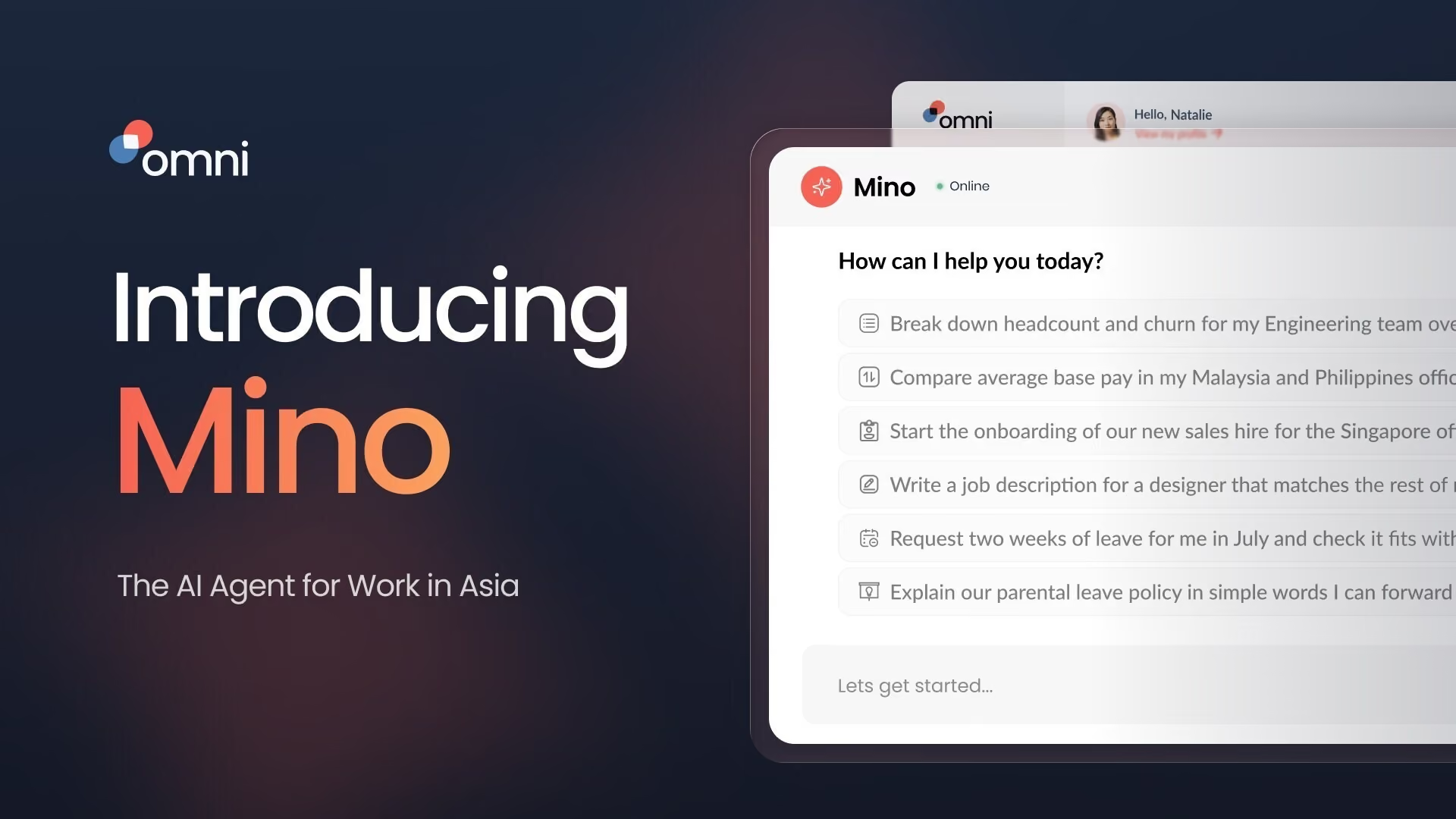
Most of what powers the 10 use cases above, the payroll engine calculating CPF and EPF automatically, leave entitlements applying the right country rule, offboarding workflows triggering on schedule, is core Omni HR automation running on your live data. Mino, our AI agent, sits on top of that same data as the layer you actually talk to.
Mino works across three things:
- Answers questions directly — why a payroll number changed, what the compliance rule is in a given market, a quick headcount or leave lookup
- Analyzes your workforce data — build a dashboard on request, flag attrition risk early, compare hiring or cost across markets side by side
- Acts on specific tasks when you ask it to — shortlist candidates, kick off a new hire's onboarding from inside the chat, start an approval workflow
Mino asks for confirmation before anything consequential happens.
Because Mino runs inside the permissions each person already has in Omni, the same agent serves your whole team without anyone seeing data they shouldn't, and your data doesn't leave your environment.
"What sets Mino apart isn't the chat interface, it's that the data, the compliance logic, and the security model were built for multi-country Asia from the start, not adapted from a platform designed for something else."
— Brian Ip, CEO at Omni HR
Choose the Platform That Runs Agentic AI For You
The HR teams seeing the biggest gains from agentic AI aren't the ones with the biggest budgets. They're the ones who stopped running HR manually and chose a platform built to do the work with them, not just alongside them.
Uncover the full insights in our State of AI in HR 2026 Report.
For APAC teams managing complexity across countries, currencies, and compliance frameworks, this isn't a nice-to-have. It's the difference between an HR team that's still chasing payroll inputs in 2027 and one that's spending that time on the workforce strategy that actually moves the business.
Book a demo or start a free trial to see how Omni HR and Mino handle agentic HR for your markets.
Frequently Asked Questions
An AI agent for HR is a system that perceives a trigger, such as a new hire or a leave request, reasons against HR policies and employee data, and executes the appropriate action without manual input. Omni's AI agent, Mino, works this way inside Omni's core HRIS.
Regular automation follows fixed if-this-then-that rules. Agentic AI reasons through context, like an employee's location and tenure, before deciding what action to take and executing it. In Omni HR, the core engine checks statutory entitlements automatically before triggering a leave or payroll workflow, and Mino gives you a plain-language answer the moment you ask why.
AI agents can handle onboarding task sequences, candidate screening, payroll data collection and anomaly checks, leave approvals, compliance deadline tracking, performance review scheduling, and workforce planning. Omni's AI agent, Mino, currently in early access, covers a first set of these: answering payroll and compliance questions, building workforce dashboards, flagging attrition risk, shortlisting candidates, and starting onboarding from chat.
Agentic AI is safe when human-in-the-loop oversight is built in for sensitive decisions like hiring, promotion, and performance, and when the platform is transparent about what data an agent can access and act on. Look for architecture that doesn't send raw employee records to a language model. Omni's AI agent, Mino, queries your data schema and applies access controls before any result reaches the model, so raw PII is never transmitted to a hosted LLM.
Omni HR's AI agent, Mino, works inside Omni's core HRIS to answer payroll and compliance questions, build workforce dashboards, flag attrition risk, shortlist candidates, and start onboarding from chat, across Singapore, Malaysia, the Philippines, Indonesia, and Hong Kong. See how Mino works or explore Mino directly.
.png)


.png)
.png)