
















 SG
 MY
 PH
 HK






Summary. Philippine employers must close 2026 payroll by releasing 13th month pay by 24 December, completing tax annualization, refunding over-withheld tax by 25 January, and filing BIR Form 1604-C and issuing BIR Form 2316 by the end of January 2027. This year’s figures reflect Metro Manila’s mid-year wage increase under Wage Order NCR-28 and 10 higher de minimis ceilings under Revenue Regulations (RR) No. 29-2025. HR and payroll teams should confirm wage histories and benefit totals before December, since errors in the base figures carry into every filing. Omni HR calculates 13th month pay from actual salary history, runs annualization in the final payroll and generates BIR Form 2316 data from the same records.
Philippine employers must close 2026 payroll in this order:
- Release 13th month pay by 24 December 2026.
- Complete year-end tax annualization in the last December payroll.
- Refund any over-withheld tax by 25 January 2027.
- File BIR Form 1604-C with the alphalist and issue BIR Form 2316 to employees by the end of January 2027.
The steps themselves are familiar. What makes 2026 different is that two of the base figures behind them changed during the year.
The first is the Metro Manila minimum wage, which rose on 26 September, so many employees’ 13th month pay now spans two rates. The second is that the Bureau of Internal Revenue (BIR) raised ten de minimis benefit ceilings in January, which affects how much of each employee’s year-end package is taxable.
Get those two inputs right and the rest of year-end payroll follows. Get them wrong and the error carries through every filing until it surfaces in a BIR reconciliation.
This guide walks through year-end payroll in the order the work actually happens, from confirming the wage base in November to submitting signed Form 2316 copies in February. For the bigger picture of running compliant payroll in the Philippines all year, see how to run payroll in the Philippines in line with local laws.
Key takeaways
- 13th month pay: due on or before 24 December 2026 under Labor Advisory No. 21, Series of 2026, with no exemptions or deferment.
- NCR minimum wage: rose to PHP 755 a day on 26 September 2026, so 13th month pay for NCR minimum wage earners uses two daily rates.
- De minimis benefits: RR No. 29-2025 raised ten tax-exempt ceilings from 6 January 2026.
- PHP 90,000 cap: 13th month pay and other benefits stay tax-exempt up to a combined PHP 90,000 for 2026.
- Sunday deadlines: 31 January and 28 February 2027 both fall on a Sunday, so plan to file early.
What are the year-end payroll deadlines in the Philippines?
Philippine year-end payroll runs on six legal deadlines between December 2026 and February 2027, split between the Department of Labor and Employment (DOLE) and the BIR.
DOLE governs 13th month pay. The BIR governs everything tax-related: annualization, refunds and the annual returns. Because each deadline depends on figures from the one before it, the safest approach is to plan backwards from 24 December.
Two of these dates land on a Sunday. BIR deadlines that fall on a weekend generally move to the next working day (1 February and 1 March 2027). Even so, most payroll teams treat the Friday before as the real deadline rather than depend on that rule. If you’re unsure, confirm with your Revenue District Office (RDO).
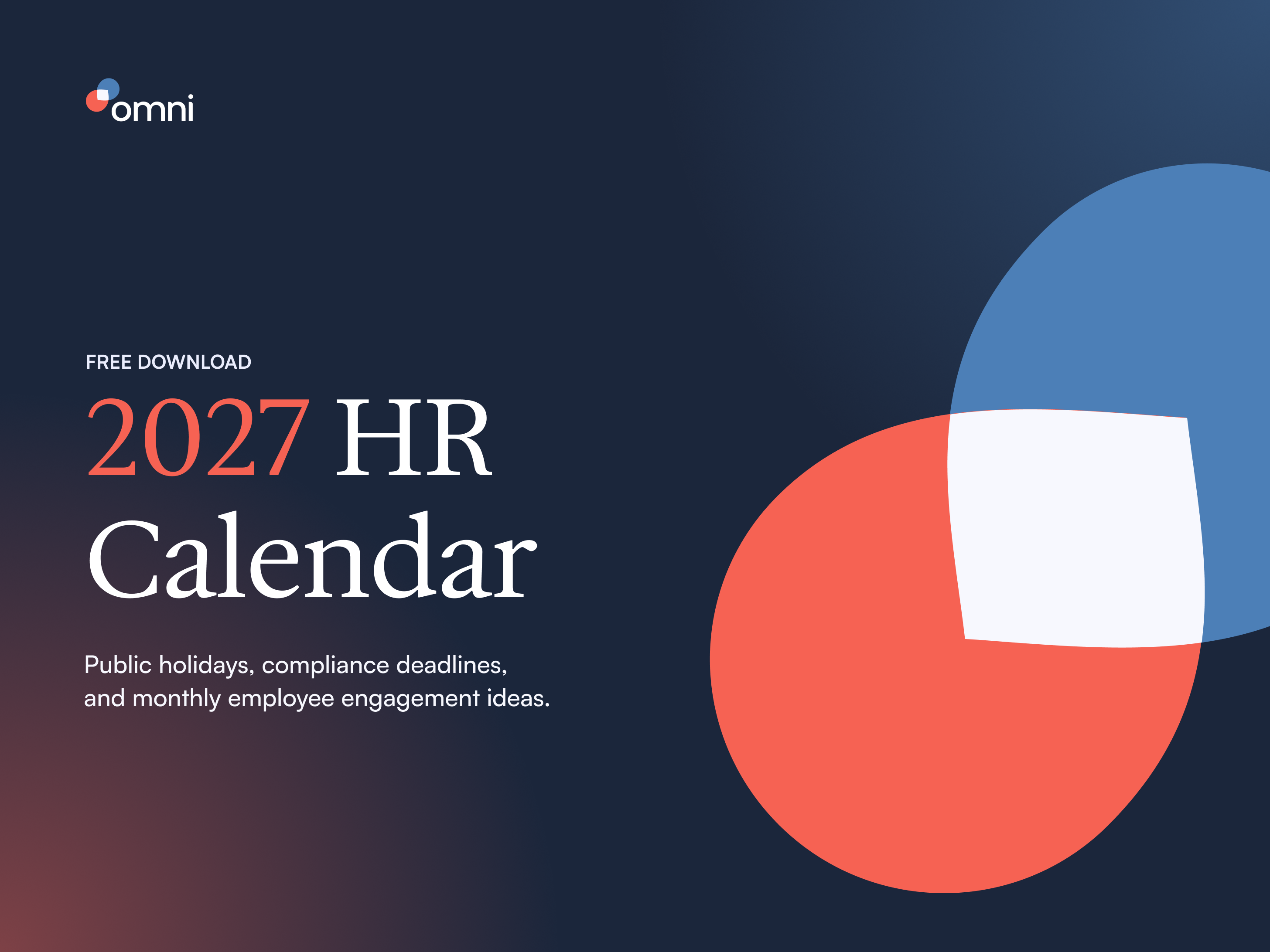
To keep every date in view, add them to your copy of the 2027 HR Calendar.
Step 1: Confirm your 2026 wage base
Before you compute anything, confirm each employee’s basic salary history for the year, because 13th month pay, overtime, holiday premiums and annualization are all calculated from it. This step is easy to skip in a normal year. In 2026 it matters more, because Metro Manila’s wage floor moved in the last quarter.
Under Wage Order No. NCR-28, the non-agriculture minimum wage in the National Capital Region (NCR) rose from PHP 695 to PHP 755 a day, effective 26 September 2026. The lower tier (agriculture, small retail and service establishments, and small manufacturers) rose from PHP 658 to PHP 718.
For NCR minimum wage earners, payroll records should show the old rate for every day worked before 26 September and the new rate from that date onward. Averaging the two rates across a payroll cutoff produces small errors that compound at year end.
The rate in force is NCR-28. An earlier order, NCR-27, is blocked by a Pasig court injunction and is being challenged at the Supreme Court, so its proposed PHP 780 rate for January 2027 shouldn’t go into any year-end figure unless the courts lift that injunction.
If you employ staff outside Metro Manila, check the latest order from each Regional Tripartite Wages and Productivity Board. Our Philippines minimum wage guide lists current rates by region.
This is also the point to reconcile retroactive salary differentials paid during the year, and to flag every employee whose pay changed mid-year. Clean employee records make this much faster. Those employees need their 13th month pay computed on blended earnings, which is the next step.

Step 2: Compute and release 13th month pay by December 24
13th month pay is a mandatory benefit of at least one-twelfth (1/12) of an employee’s total basic salary earned in the calendar year, payable on or before 24 December.
The entitlement is broad. Every rank-and-file employee in the private sector who worked at least one month in 2026 qualifies, regardless of position, employment status or how they’re paid. The 2026 advisory names several groups that payroll teams sometimes miss:
- Piece-rate workers
- Employees paid a fixed wage plus commission
- Employees with more than one employer
- Employees who resigned or were terminated during the year, who receive a prorated amount (see how HR software prorates 13th month pay for mid-year joiners and leavers)
- Employees who went on maternity leave and received a salary differential
The most common computation error is putting too much into “basic salary.” Basic salary excludes overtime pay, night shift differential, holiday premiums, cash conversions of unused leave and allowances. These are included only if a collective bargaining agreement, company practice or policy says they should be.
When an employee’s pay changed mid-year, add up what they actually earned at each rate. Take an employee who earned PHP 20,000 a month from January to September and PHP 21,000 from October to December:
- Total basic salary: (PHP 20,000 × 9) + (PHP 21,000 × 3) = PHP 243,000
- 13th month pay: PHP 243,000 ÷ 12 = PHP 20,250
Check individual cases with our free 13th month pay calculator. For more worked examples, read our full guide to 13th month pay computation.
The deadline itself needs some planning this year. 24 December 2026 is a special non-working day, so many employers release 13th month pay in an earlier December payroll. After release, employers file a compliance report on the DOLE Online Compliance Portal. DOLE set the report deadline at 15 January in recent years, so watch for DOLE’s announcement of the 2027 date.
Step 3: Apply the PHP 90,000 cap and the 2026 de minimis ceilings
13th month pay and other benefits, such as Christmas and productivity bonuses, are tax-exempt up to a combined PHP 90,000 a year under the TRAIN Law (RA 10963), and only the amount above PHP 90,000 is taxable.
A House bill filed in February 2026 proposes raising that cap to PHP 150,000. It hasn’t been enacted, so PHP 90,000 still applies to 2026 compensation. For how the excess is taxed in payroll, see how payroll software calculates withholding tax on 13th month pay above the tax-exempt threshold.
De minimis benefits work alongside that cap. These are small benefits the BIR exempts from income tax and fringe benefit tax, up to fixed ceilings. Revenue Regulations (RR) No. 29-2025 raised ten of those ceilings, effective 6 January 2026. The increases are modest individually, but they apply to the full year, so payroll systems should have been using them since January:
The two thresholds interact in a specific order:
- Each de minimis benefit is tested against its own ceiling.
- Anything above that ceiling moves into “other benefits.”
- Other benefits are added to 13th month pay, and the combined total is tax-exempt up to PHP 90,000. Everything above PHP 90,000 becomes taxable compensation in the December annualization.
If your system was still on the old ceilings for part of the year, you’ll have over-taxed some employees, and annualization is where you correct it. Our guides to de minimis benefits and fringe benefits cover each benefit type in more detail.
Step 4: Convert unused service incentive leave to cash
Service incentive leave (SIL) is five days of paid leave a year for employees with at least one year of service, and under the Labor Code any unused SIL must be converted to cash at the end of the year.
Employers that already give at least five days of paid vacation leave are exempt from providing separate SIL, but they still need to follow their own policy on unused leave. If that policy isn’t written down yet, start from our leave policy template.
In practice, this means pulling each employee’s unused balance as of 31 December and paying the cash equivalent. Our guide to leave encashment calculation explains the general method. The tax treatment ties back to Step 3: monetized unused vacation leave of private employees is tax-exempt up to 12 days under RR 29-2025, up from 10.
For how an HR system handles SIL alongside overtime and separation pay, see what HR system can handle Philippine Labor Code requirements without Excel.
Step 5: Pay year-end holidays at the correct premiums
The last five weeks of 2026 contain three regular holidays and three special non-working days under Proclamation No. 1006, and each type carries a different pay rule. That’s a lot of holiday pay in the same window as 13th month pay, which makes it easy to miscode a day.
The two types differ when employees don’t work:
- Regular holiday: employees are still paid 100% of their daily rate.
- Special non-working day: “no work, no pay” applies unless company policy or a collective bargaining agreement says otherwise.
For NCR minimum wage earners, every premium in this period is computed on the new PHP 755 rate, which is the Step 1 wage base showing up again. Accurate attendance records are what make these premiums easy to verify.
For the full calendar and the premium rules for overtime and rest days, see our guides to Philippine public holidays, paid holidays and overtime pay computation.
Step 6: Complete year-end tax annualization
Tax annualization is the year-end adjustment where the employer recomputes each employee’s total tax due for the year and compares it with the tax already withheld.
Under RR No. 2-98, as amended, employers complete it before the last payroll of December. The difference is then either collected from the employee or refunded to them.
Annualization is where everything from the earlier steps comes together:
- Total each employee’s 2026 taxable compensation, including any 13th month pay and bonuses above the PHP 90,000 cap from Step 3.
- For employees who joined mid-year, add the income and tax shown on their previous employer’s BIR Form 2316. Leaving this out is one of the most common causes of under-withholding.
- Compute the annual tax due using the graduated income tax table.
- If tax withheld is lower than tax due, collect the difference in the December payroll.
- If tax withheld is higher, refund the excess to the employee no later than 25 January 2027.
The refund deadline is easy to underestimate. Failing to refund excess tax withheld is a violation of the National Internal Revenue Code (NIRC), and it’s also the kind of issue employees notice and raise.
Our full guide to tax annualization in the Philippines walks through the computation with examples. Each employee’s net salary for December will reflect the adjustment, so flag large collections to employees before payday.
Step 7: Remit December statutory contributions
December contributions to the Social Security System (SSS), PhilHealth and the Pag-IBIG Fund use the same 2026 rates as the rest of the year and are remitted in January under each agency’s schedule.
Nothing changes in the rates at year end, but the December remittance is the last chance to make sure each employee’s contribution history for the year is complete before the annual returns are filed.
For the full contribution tables, see our guides to SSS contributions, Pag-IBIG contributions and PhilHealth contributions. You can check SSS figures with the free SSS contribution calculator. For a summary of all three in one place, see the payroll compliance rules companies must follow for SSS, Pag-IBIG and PhilHealth.
Step 8: File BIR Form 1604-C and issue BIR Form 2316
By the end of January 2027, employers must file BIR Form 1604-C with the alphalist of employees and give each employee a signed BIR Form 2316, then submit signed 2316 copies to the BIR by the end of February 2027.
These filings are the BIR’s record of everything you did in Steps 1 to 6, so any earlier error shows up here.
BIR Form 1604-C is the annual information return of income taxes withheld on compensation. The alphalist attached to it lists every employee with their compensation and tax for the year.
BIR Form 2316 is each employee’s certificate of compensation payment and tax withheld. For employees who qualify for substituted filing, it also serves as their income tax return, so they don’t file their own. If you also pay contractors or suppliers, their withholding is reported separately on BIR Form 2307, not on Form 2316.
The BIR cross-checks three records: the alphalist, the individual 2316 forms and the monthly BIR Form 1601-C remittances made during the year.
When they don’t agree, the mismatch is a common audit trigger. Reconcile all three before filing, not after.
There’s a direct cost to getting this wrong as well. Under Section 250 of the NIRC, failing to file an information return or supply required information on time carries a penalty of PHP 1,000 for each failure, up to PHP 25,000 in a calendar year.
Our guides to BIR Form 2316 and income tax returns in the Philippines cover the forms field by field.
Step 9: Settle final pay for year-end separations
Employees who leave in November or December are owed final pay that includes prorated 13th month pay, the cash value of unused leave and any tax refund from their annualization. This is where year-end and offboarding overlap, and it’s easy for one to delay the other.
DOLE Labor Advisory No. 06, Series of 2020 sets 30 days from separation as the standard release period for final pay. It also requires a certificate of employment within three days of the employee’s request. Employees leaving in December also need their own Form 2316, because their next employer will use it in that employer’s annualization.
Where the separation is due to retrenchment, redundancy or other authorized causes, separation pay is owed on top of final pay.
For a step-by-step process, see how to process separation pay and final payroll for resigned employees in the Philippines. Our exit interview questions can help you close out the conversation side of offboarding at the same time.
How does Omni HR handle year-end payroll in the Philippines?
Most year-end payroll errors aren’t calculation mistakes. They come from disconnected data: wage histories in one spreadsheet, leave balances in another system and tax figures in a third.
Each handoff between them is a chance for a figure to drift, and the BIR reconciliation in Step 8 is usually where the drift surfaces.
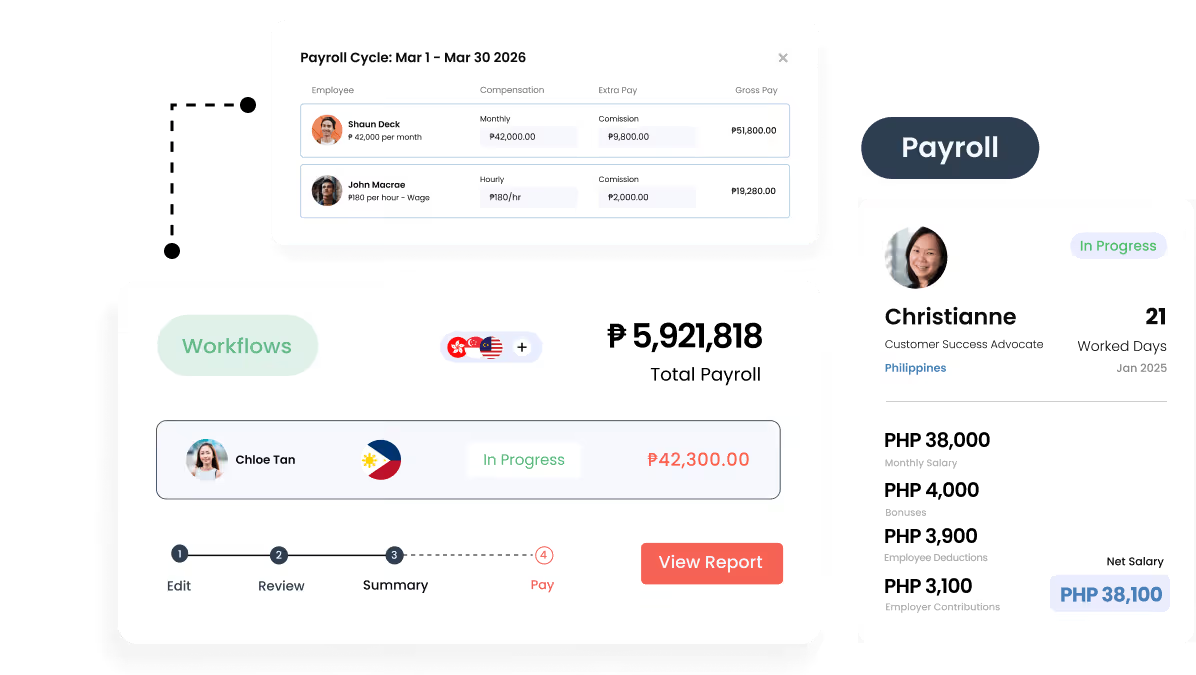
Omni HR runs these steps in one payroll engine, so each figure flows from the same records:
- 13th month pay is calculated from each employee’s actual basic salary history, including mid-year wage order changes such as NCR-28.
- De minimis ceilings and the PHP 90,000 cap are applied per employee, with any excess moved into taxable compensation automatically.
- Annualization runs in the final December payroll, with collections and refunds applied ahead of the 25 January deadline.
- BIR Form 2316 and alphalist data are generated from the same payroll records, so the totals reconcile before you file.
- SSS, PhilHealth and Pag-IBIG contributions are calculated at current rates, with an audit trail for each rate change. See how Omni HR handles SSS, PhilHealth, Pag-IBIG and BIR.
For more on choosing a platform, see our guides to HR and payroll systems in the Philippines, HRIS in the Philippines and the best HRIS systems in the Philippines.
If you’re planning to move providers after year end, our checklist for switching payroll companies covers the migration.

Frequently Asked Questions
13th month pay must be released on or before 24 December 2026, under Presidential Decree No. 851 and DOLE Labor Advisory No. 21, Series of 2026. DOLE doesn’t allow exemptions or deferment, and its regional offices monitor compliance.
Under the TRAIN Law (RA 10963), 13th month pay is tax-exempt up to ₱90,000 combined with other bonuses. Amounts above ₱90,000 are subject to withholding tax at your graduated rate.
Add up the basic salary actually earned at each rate during the year, then divide by 12. For NCR minimum wage earners in 2026, that means PHP 695 a day before 26 September and PHP 755 a day from that date. The Omni HR 13th month pay calculator can check the result.
After year-end annualization, employers must refund any excess tax withheld no later than 25 January of the following year, usually through the December payroll or a January adjustment.
Employers must give employees their signed BIR Form 2316 by 31 January 2027 and submit signed copies to the BIR by 28 February 2027. Both dates fall on a Sunday, so file by the Friday before or confirm the next-working-day rule with your RDO.